Maintaining Hope and Humanity in Gaza

1. Café Palestine 36: Get To Know Us! Our lives with mental illness in the Palestinian community

Presenters: Suzan Mitwalli and Dr Yoke Rabaia from Birzeit University and Professor Hanna Kienzler from Kings College, London introduce an innovative user-led project exploring the reality of living with mental health difficulties in Palestine. Recording available here.
2. Maintaining Hope and Humanity in Gaza: Yasser Abu Jamei in London

Yasser Abu Jamei, psychiatrist and Director General of the Gaza Community Mental Health Programme, speaking at Café Palestina in a meeting hosted by Friends of Bir Zeit University and the UKPMHN. There are two links, for Yasser’s main presentation (with an introduction by Martin Kemp) click here, and for a section of the Q&A click here.

‘In Gaza, the trauma continues’ is a recent article by Yasser; see also ‘Gaza children’s mental health goes from bad to worse’ by Maha Hussaini.
3. Call for Arabic-speaking clinicians

If you speak Arabic, and would be interested in committing an hour or two each week to working with colleagues in Gaza, please contact us at: ukpalmhn@gmail.com.
4. The Palestinian anti-Apartheid movement: “ALL PEOPLE ARE EQUAL AND SHOULD BE TREATED WITH DIGNITY AND RESPECT”

The UKPMHN has signed the pledge to work for an apartheid-free Palestine. Could your association sign? See the website here.

Posted in Uncategorized | Comments Off on Maintaining Hope and Humanity in Gaza

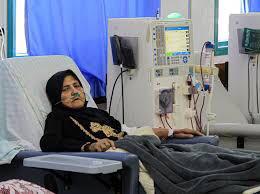
Palestinian kidney patients in the Gaza Strip

Over 1,200 Palestinian kidney patients in the Gaza Strip are at grave risk as Israel bans diagnostic medical equipment from entering the Gaza Strip hospitals.


Posted in Blockade | Comments Off on Palestinian kidney patients in the Gaza Strip

Aid cuts a “death sentence” for Gaza’s poor

Ammar Banat’s home was destroyed by Israel during its May attack on Gaza.

Mohammed Salem

May proved to be an extremely cruel month for Ammar Banat and his family.

First, the family learned that the World Food Programme (WFP) was about to end the food aid on which they depend.

Next, they received a phone call telling them to evacuate their home in the Beit Lahiya area of northern Gaza as it was about to be bombed by the Israeli military. Their home was destroyed and they are now forced to live in a warehouse.

According to Ammar, news of the aid cut was a more “crushing blow” than being made homeless.

“They took away the food aid without any justification,” he said. “It is impossible for us to survive without it.”

Ammar is an unemployed father of six.

In recent times, the only work he has been able to find was as a farm laborer.

The work has not been steady. He would typically be hired for one day and then have no work for the following 10 days.

And – at approximately $8 per day – the wages have been meager.

For around seven years, he and his family have received a monthly food basket from the WFP, consisting of essential items like flour, sugar, salt and cooking oil.

Such aid has equally proven vital for his extended family. His brother Faraj – also left homeless by Israel’s May attack on Gaza – has been receiving a voucher worth $47 per month from the WFP.

Faraj described the combined effect of the May bombing and the aid cuts as “an unbearable burden to bear.”

“I have no money to feed my children,” he said.

Forced to beg?

This month, the WFP is suspending aid to about 200,000 Palestinians. The cuts have been caused by a $51 million funding shortfall.

Further cuts – likely to impact 100,000 other Palestinian aid recipients – are expected by August, unless the funding gap is filled.

Most of Gaza’s 2 million inhabitants are categorized as food insecure. They depend on aid.

The full blockade imposed by Israel has caused extreme hardship. According to the latest available data, unemployment now stands at 46 percent in Gaza.

Having a job often does not offer sufficient protection from poverty. Around 88 percent of employees in Gaza are paid less than the legal minimum wage stipulated by the Palestinian Authority (1,800 shekels or roughly $500 per month).

Salwa Warsh Agha is a mother of two children and lives in Beit Lahiya. Their one-bedroom home is small and dilapidated.

She has relied on a monthly WFP voucher of $30 for the past seven years. Without that payment, she fears that she will be unable to cope.

“Will I have to beg so that my children will be fed?” she asked.

The stress is exacerbating her health problems. She has undergone three eye operations and has constant back pain.

“Life in Gaza is hard,” she said. “I have not been able to afford medical treatment and I am now struggling with high blood pressure.”

Unable to pay her electricity bills, she tries to shrug off the prospect of being arrested or imprisoned for debt. “I’m already living in despair,” she said.

“Vital lifeline”

Samer AbdelJaber, the WFP’s representative in Palestine, is urging governments and businesses to plug the funding gap without delay.

“Ongoing donor support has enabled us to offer a vital lifeline to Palestinians and establish long-lasting food solutions in Palestine,” he said. “It is crucial, now more than ever, to ensure that our efforts remain uninterrupted.”

The United Nations has warned that there will be catastrophic consequences if donors do not provide the necessary funding.

Both the WFP and the UN agency for Palestine refugees (UNRWA) are experiencing severe financial problems. One major factor behind these problems is that the Russian invasion of Ukraine has shifted much attention away from Palestine.

Samah al-Qanou was already finding it hard to cope before the aid cuts were announced.

Mohammed Salem

For Samah al-Qanou, being told of the WFP aid cuts “felt like a death sentence.”

Her family has been receiving a monthly WFP voucher worth $47 for around a decade.

Her husband Kareem has long been unemployed. Both she and Kareem have a variety of medical issues.

Feeding their three sons is a major challenge even with the aid voucher. Their staple is bread baked in a clay oven.

“I have had to borrow money just to buy a bag of flour,” Samah said.

Lacking basic food “casts a dark shadow” over occasions that should be joyful, she added. “I couldn’t buy any sweets at all for Eid al-Fitr this year.”

The aid cuts are bound to hurt small firms in Gaza, too.

Ahmad al-Baba runs a supermarket, which until recently served around 300 families. Many customers have used WFP vouchers to buy groceries.

Ahmad al-Baba runs a supermarket, where many customers have used WFP vouchers to buy groceries.

Mohammed Salem

The supermarket used to employ five people and rent four warehouses for storage in Jabaliya refugee camp.

“The sharp decline in demand has forced us to downsize,” said al-Baba. “Now we only have one worker and one warehouse.”

Aseel Mousa is a journalist based in Gaza.

Posted in Blockade | Comments Off on Aid cuts a “death sentence” for Gaza’s poor

‘We tell them they can still laugh’ – the doctor treating the mental scars of Gaza’s children

https://www.theguardian.com/world/2023/jun/04/we-tell-them-they-can-still-laugh-the-doctor-treating-the-mental-scars-of-gazas-children?CMP=Share_iOSApp_Other

The head of a charity in the strip helping people traumatised by the conflict explains why he still has hope for the future

Emma Graham-Harrison

Sun 4 Jun 2023

Dr Yasser Abu Jamei is an unlikely optimist, a psychiatrist running the biggest mental health charity in Gaza, where four out of five children live with depression, fear and grief.

The 365 sq km (140 sq mile) Palestinian enclave on the Mediterranean – a tiny strip of land regularly bombed, heavily blockaded and desperately poor – has provided a grim laboratory for testing how repeated trauma affects the human mind.

In Gaza, “people do not have means to recover and people are not given the space to recover,” said Abu Jamei. He is on the frontline of the largely invisible battle to protect and heal the population, as head of the Gaza Community Mental Health Programme (GCMHP).

Last year it served more than 4,400 people, above its maximum official capacity, but still just a fraction of those who might need its help.

“Of course, this is not a reflection of the need in Gaza Strip,” said Abu Jamei, who relies on donations to fund the centre’s work.

“The WHO [World Health Organization] says that in areas of conflict 10% of the population will develop moderate to severe mental health illness,” he said. Gaza has a population of more than 2 million, suggesting hundreds of thousands are suffering or are at risk.

The nonprofit organisation supports the only psychotherapists and the only child psychiatrist in Gaza, as well as community outreach projects, including a sports programme for some of the most vulnerable children.

Part of its work, particularly the sport, aims to help traumatised children find a path back to something like normal life.

Their journey is where Abu Jamei finds hope and the inspiration to keep going. “We try to bring colour into their lives,” he said. “We tell children that you can still laugh, that you can still have fun, that you can still just exhale, you know, get rid of the negative emotions.

“Of course, you cannot erase the memories that you have, but at least you can add more memories that will let the previous ones, the sad ones, go.”

The pain Abu Jamei’s patients grapple with is one he knows intimately; few families in Gaza are untouched by violence. In 2014, an Israeli missile killed 28 members of his extended family as they sat down for an iftar to break their Ramadan fast.

Most people in Gaza are not able to leave their small homes after 15 years of an intensifying Israeli blockade; residents and human rights activists call it “an open-air prison”. There is nowhere to seek safety when Israel launches one of the military operations that have become a semi-regular feature of life since 2014. Israeli authorities say the military operations are necessary in self-defence, because Hamas targets Israeli citizens with rockets from the Gaza Strip.

“Given the small geographical area of Gaza Strip, and the high population density, almost all kids are exposed to trauma when attacks, large-scale operation military operations, happen,” Abu Jamei said.

Each operation compounds the traumas inflicted by previous attacks, and in recent years they have become more frequent. “It’s getting harder and harder with time, because the last three years, we had three consecutive attacks. In 2021, 2022, 2023.”

Posted in Blockade | Comments Off on ‘We tell them they can still laugh’ – the doctor treating the mental scars of Gaza’s children

*CIR denounces renewal of Framework agreement between UNRWA, US*

Council on International Relations – Palestine denounced the renewal of the Framework Agreement between the United Nations Relief and Works Agency for Palestine Refugees “UNRWA” and the United States of America which guarantees the flow of US aid to UNRWA in return for UNRWA being committed to obligations that affect the essence and purpose of its work.
The Council said in a statement issued, Saturday, that the agreement makes the United States an observer of UNRWA and its work and will enable it to evaluate Palestinian curricula and change them to obliterate Palestinian rights and constants.
The CIR added: “The agreement has serious human rights implications for both UNRWA staff and its beneficiaries, including the right to freedom of expression, resistance and action against the occupation.”
“The renewal of the Framework Agreement, although it secures financial assistance, has clear political and security motives. Its ultimate goal is the interests of the occupation in liquidating the Palestinian refugee issue and the right of the Palestinian people to self-determination.” the Council added.
The Council called on the UNRWA to retract the agreement, and called on member states to increase funding for UNRWA to protect it from conditional and illegal political blackmail. It also called on UNRWA to disengage from all agreements that restrict its work and deviate it from its primary goals.
Posted in Blockade | Comments Off on *CIR denounces renewal of Framework agreement between UNRWA, US*

Don’t let another military assault put Gaza back on the agenda

May 31, 2023

“This was the sixth major Israel military attack in Gaza, among hundreds of smaller campaigns, over the past 15 years. Our former minister of defense referred to this as ‘mowing the lawn.’ Officials say things like ‘we have no choice but to manage the situation’ because ‘there is no solution.’ True leadership would work tirelessly to create hope instead of surrendering to perpetual occupation, recurrent military attacks, rocket fire from Gaza, and other travesties.”

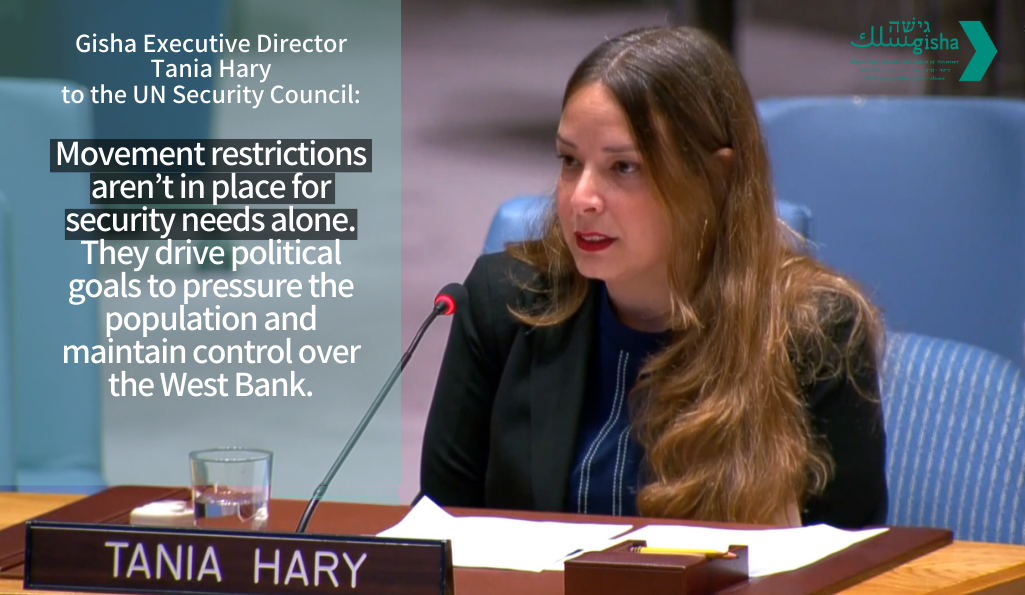
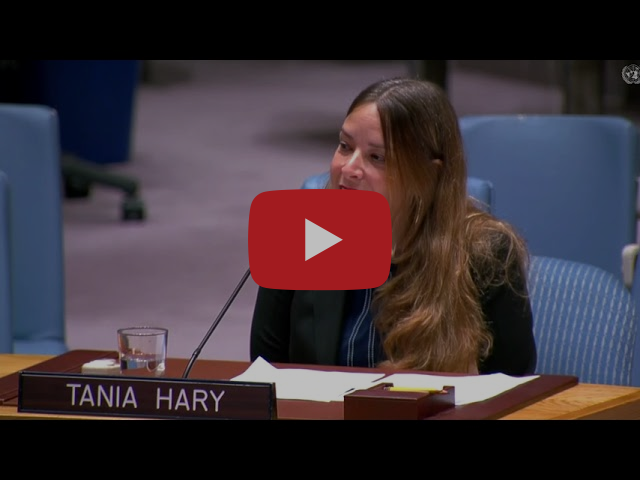
Last week, Gisha Executive Director Tania Hary addressed the United Nations Security Council in New York. In her remarks, she underlined the important role of the international community in ensuring protection of Palestinians’ human rights, including by bringing to an end Israel’s ongoing and illegal closure of Gaza.

clik here
Tania Hary’s full speech at the UN Security Council.

“The closure is part of what Israel calls the Separation Policy. Movement between Gaza, Israel, and the West Bank is barred other than in exceptional circumstances. Israel faces legitimate security challenges but movement restrictions aren’t in place for security needs alone. They drive political goals to pressure the population and maintain control over the West Bank. Most importantly, Israel’s narrow interpretation of its obligations towards Palestinians creates a crisis of accountability.”

In her address, Tania called on members of the council to protect the space for humanitarian and human rights work in Israel and Palestine, and emphasized the urgent necessity of bringing the closure, “a persistent and pernicious injustice and form of collective punishment,” to an end. “Please don’t let another military assault put Gaza and Palestine back on the agenda, put it there because you know it’s the right thing to do,” she concluded.

To read the full transcript of Tania’s address, click here.

Posted in War | Comments Off on Don’t let another military assault put Gaza back on the agenda

conversazione con Stefania Ascari, la parlamentare che non rinuncia a parlare di Palestina

Maggio 31, 2023

Di Romana Rubeo

Sabato 29 marzo, nella città svedese di Malmö, si è svolta la 20° Conferenza dei Palestinesi in Europa, con il titolo “75 anni e ritorneremo”. Come ogni anno, all’appuntamento hanno preso parte migliaia di palestinesi, oltre ventimila secondo gli organizzatori.

Tra seminari, convegni, balli tradizionali, stand di cibo e famiglie che sventolano la bandiera palestinese, la conferenza è diventata un appuntamento rituale per le comunità palestinesi in shataat, diaspora.

All’evento partecipano, da sempre, anche politici di varie nazioni europee che intendono così esprimere la loro vicinanza alla causa del popolo palestinese. La loro partecipazione, tuttavia, genera non poche polemiche. D’altro canto, chiunque si esponga a favore dell’autodeterminazione dei palestinesi e, di conseguenza, critichi le politiche oppressive portate avanti da Israele, mette in conto di dover spesso giustificare le proprie scelte dinanzi alla poderosa macchina della propaganda israeliana.


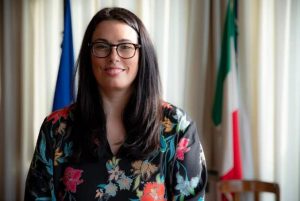
Alla conferenza di Malmö ha preso parte la parlamentare italiana del Movimento 5 Stelle Stefania Ascari. Ascari è un’avvocata modenese che ha fatto del suo mandato in parlamento un’occasione per condurre a viso aperto quelle che lei considera irrinunciabili battaglie di giustizia. È in questo contesto che va considerato il suo attaccamento alla causa e al popolo palestinese, che non è affatto di facciata.

Dopo aver visitato la Cisgiordania occupata e aver partecipato a delle delegazioni nei campi profughi palestinesi del sud del Libano, per la parlamentare del 5 stelle, la battaglia per il diritto all’autodeterminazione del popolo palestinese è entrata a pieno titolo tra le sue priorità.

Abbiamo deciso di parlare con lei, per capire le ragioni che l’hanno indotta a partecipare alla conferenza e per darle l’opportunità di ribattere alle critiche che le sono piovute addosso.

Onorevole Ascari, la sua vicinanza alla causa palestinese l’ha esposta ad aspre critiche già in passato. Quando, ad esempio, ha partecipato alla delegazione che ha portato aiuti umanitari in vari campi profughi, tra cui quello di Ein el Hilweh, dove la situazione umanitaria è allo stremo, il quotidiano Il Giornale aveva definito quel luogo come un campo “infiltrato dai jihadisti”. Cosa pensa della sistematica operazione di deumanizzazione dei palestinesi portata avanti dai sionisti e dai loro sostenitori?

Penso che ci sia un doppio standard applicato in primo luogo dai media e che poi si riversa in parte dell’opinione pubblica.

Mentre, in riferimento ad altri contesti, chiunque si opponga a una forza occupante, è giustamente raccontato come combattente o partigiano, quando si parla di palestinesi, questi vengono immediatamente dipinti come terroristi.

È un errore frutto di una scarsa conoscenza dei fatti e di un dibattito reso sempre più povero da pregiudizi e da una mancata contestualizzazione di ciò che realmente accade nell’area.

Chi prova a discostarsi da questa narrazione e a denunciare le sofferenze del popolo palestinese, diventa vittima di accuse infamanti.


Le ultime, feroci, critiche, sono arrivate dopo la Conferenza dei Palestinesi in Europa. Oltre a un articolo apparso sul solito Il Giornale, anche politici di vario schieramento, da Italia Viva a Forza Italia, si sono prestati al solito coro di accuse bollando l’evento come “filo-Hamas”.

È la solita macchina del fango con cui la destra italiana cerca di delegittimare le voci critiche e di farle tacere.

Negli anni si è creato un tale clima di intimidazione per cui in molti preferiscono tirarsi indietro e non prendere posizione.

La conseguenza è che gli spazi per parlare di Palestina diminuiscono progressivamente e chiunque provi a raccontare il dramma che si consuma in quelle terre già mette in conto che andrà incontro a insulti e calunnie.

Io, come al solito, mi difendo, smentisco le accuse e vado avanti con il mio impegno.

Non trova strano che questi politici non abbiano avuto nulla da dire mentre, ad esempio, Israele bombardava Gaza nei giorni scorsi, uccidendo 33 persone, tra cui moltissimi civili? Oppure che non dicano nulla sulle sistematiche e comprovate violazioni del diritto internazionale da parte di Tel Aviv? Persino membri del Congresso Americano oggi parlano apertamente di tali violazioni, mentre in Italia, il completo asservimento alle posizioni di Israele sembra ormai essere scontato per la stragrande maggioranza della nostra classe dirigente.

La Palestina è uno Stato mai nato, che da queste parti facciamo finta di non vedere. La maggioranza dei media tradizionali in Italia non parla delle violazioni dei diritti umani e del diritto internazionale perpetrate dall’esercito israeliano. Se ne dà notizia, nella maggior parte dei casi, si limita a parlare di conflitto israelo-palestinese, una dicitura sbagliata perché annulla l’asimmetria di potere che c’è tra i due popoli e nega l’esistenza di un’oppressione. In ciò è una propaganda simile a quella israeliana.


Il suo impegno per una causa che lei ritiene giusta non si limita alle parole. Qualche settimana fa, ha lanciato l’intergruppo parlamentare Italia-Palestina. Potrebbe spiegarci come si svilupperà la sua azione?

L’intergruppo, a cui hanno aderito 22 colleghi e colleghe, si propone di essere uno spazio di dialogo e confronto volto a riportare all’ordine del giorno il tema del riconoscimento dei diritti del popolo palestinese e della pace in Medio Oriente.

Intendiamo rafforzare la rete di parlamentari, associazioni e attivisti che credono nella costruzione del processo di pace e promuovere iniziative per influenzare le decisioni del Governo. Abbiamo già svolto un primo incontro pochi giorni fa e fissato un piano di azione per i prossimi mesi estivi. Vi terremo aggiornati.

Quando le chiediamo cosa ne pensi della rappresentazione falsata che si fa del popolo palestinese nei media, dell’intenzione di dipingerlo come vittima o carnefice, tralasciandone il grande patrimonio di umanità, Ascari rivolte un ultimo appello al mondo dell’informazione.

“È molto importante che i media forniscano una copertura accurata dei fatti e che i lettori si informino anche da fonti alternative e autorevoli. Informarci, prendere posizione e alzare la testa e ciò che possiamo fare per aiutare il popolo palestinese.”
Posted in Uncategorized | Comments Off on conversazione con Stefania Ascari, la parlamentare che non rinuncia a parlare di Palestina

Israel ranked lowest of all ODEC countries in gender equality index

“Israel” scores worse than Turkey, and over twice as bad as UK and France; director of government group to advance women’s rights urges thorough examination by relevant bodies. Read more: https://bityl.co/IwiU

Posted in Blockade | Comments Off on Israel ranked lowest of all ODEC countries in gender equality index

video from DAYS OF PALESTINE

https://mail-attachment.googleusercontent.com/attachment/u/0/?ui=2&ik=33a35298b3&attid=0.1&permmsgid=msg-f:1767237624381310816&th=18867d4192f40760&view=att&disp=safe&saddbat=ANGjdJ_GloGtE8vDzVyXSP4maMij_rqgWzZMpu6v9JtWT9X0wTMvKHRzyelRqYc8jYWToAU_Py3s1HnHfa6Q3CGgjG2i9m5PbLB9B7IazNKq330RDlT0UZ98djJo91BPz3lyM3pgukJJkEK7fj7RqZX9DIM2VEQTHGH2ib5iPOX57OUyFTvuWYQz8gnJsThbfDMe5–QyimX9_w2C3g1QPOB_nNn99bDmAcRHY7jPPo68uKUwgHHV9rMsei114Y4QpxjJgRpKKL6ZndJq0zRJ48J-bVvkcehsMWeQ1dpd_cnuJUieG5STco5eedA0_4UDzJ5GBjMLFtLKeZk2BeHxF27BI6U_CKmvWDZwyuaoiUS5HNbXxLunxHlJgod7MiW3fGYKSEXmx9eIV3RXkp5NyvymOMdXIvwwImE2MR78_uzx_TzvNDsmeqF-4E3V8Q705RyoJKmPKNqAALPB0FIzmeQpyr4yiaIL8C4tWfyXbGfIt0XUGGCAQ_J-1kjriInT6Ryw5vNjWYS7XreZ3fXrvMWYa9foQkaG_bxsnVUbXxe6Orebqloi5jdmZKwqsUSfgVgzMv-0mllbqCO6vkj3sbzas3CgA5N1mmSgUPayvm-kQXcOSh2peSsHcz4o1RdXbdVRCO_WGaYzQX_WZWX1Mt5x9WNEINhKzXaKzc3JmLxKRpnJie92nhiBi0KgR0xYdADjo3gYYI51ZQdh4EmJJz6qduovfWaPyWP0A9DxGhUFCW3hP0AnFTztvToBBERv8OSlMBpG4OpkGebiMe-vjDp-XFMgKCjNhqtIqvAkyWtIuzs0KvIs77sUupJrx_A9FkC7kA_JOFKceyYvmwNtyOwi1OdXihDXwLl9GbLVsFjzC9parm7EKT29wSQ0XrK_ugmjmzYQlNM9gKqg_BiI8_DYbHplBCi9HkXmPA4ei-QMYYiC7HJCQqt0NMRN6w3sdNxvZ82lbJtQP79DHwZPy1bp_vH4l3VLgFhP-tY91tmJsKZEVZt8DfMeSylid-zftY8ZpHRVPNkrbaG5k9m

Posted in War | Comments Off on video from DAYS OF PALESTINE

aisha in Gaza

https://cvws.icloud-content.com/B/AY1H5QC5D3JlT-KMGanSH7LC_UBqAZUFGc6zzCVxp1ZBox032Udv3rl2/VIDEO-2023-05-28-16-13-05.mp4?o=ArNJ2ZfAXtCS67mzp8Uhf2EhO6rdrP113NO-MkwOsczS&v=1&x=3&a=CAogE2KY_IE-9xlIvkbhLXuAql6y-WEGtkHF2Ba3G-nR_QoSdhCN6dyWhjEYjfnX6o8xIgEAKgkC6AMA_xxNQYNSBML9QGpaBG_euXZqJYyf6z2dYfltPeQFK0yM_wRx2p_ibL8Q4w1kIlMD7CgQtPyncSRyJQj7MN1I7h2-JGlbfvdAn4kdgvlHN4kifYMKm6JOY9veYEgFxw8&e=1687877450&fl=&r=7343758B-5205-4A54-8337-D5DD77CA84C0-1&k=JUrKzaT9ENg2efteIV2LmA&ckc=com.apple.largeattachment&ckz=CD2037B6-B759-4A68-8367-6B35805F18F0&p=141&s=B3Z8KYVEctwRgvdhjde9XPvrRY8&teh=1&+=480c509d-e980-4b96-8aed-1c4cb865f917

Posted in Blockade | Comments Off on aisha in Gaza