Women with breast cancer denied treatment by Israel

denied treatment
S.K | DOP –

The life of Najla Irjilat may be in Israel’s hands.

In June 2022, she was diagnosed with breast cancer.

On the recommendation of her doctors, she had an operation in Gaza to remove a malignant tumor last September.

She had chemotherapy following that surgery and was then advised that she should undergo radiation sessions.

There was a major problem in arranging such sessions: The required equipment is not available within Gaza.

So Najla was referred to Augusta Victoria Hospital in occupied East Jerusalem.

The hospital gave her an appointment for 3 May this year. The appointment was missed.

The Israeli authorities did not reply to her request for a travel permit. Her sister Yasmin sought approval to accompany her yet the Israeli authorities rejected her sister’s application.

With help from Al Mezan, a Gaza-based human rights group, Najla made another request to travel for an appointment on 7 May (the rescheduled date). The only reply she received was that her request and a fresh request by her sister to accompany her were “under review.”

“Once again, I wasn’t able to travel for treatment,” Najla, a 45-year-old mother of six, said.

She has now submitted a third request. While the Palestinian Authority has agreed to cover the costs of her treatment, she has not yet received a response from Israel.

“Radiation is crucial to prevent the cancer coming back,” she said. “Any delay puts my life at significant risk.”

“Waiting for death”

The plight of Gaza’s medical patients made international headlines a few weeks ago.

As Israel conducted a large-scale attack on Gaza earlier this month, the BBC and other news outlets reported that hundreds of people – mostly with cancer – were blocked from traveling for urgent treatment.

The headlines briefly drew attention to the deadly consequences of the movement restrictions Israel places on Palestinians. Such restrictions also occur when Israel is not subjecting Gaza to continuous airstrikes.

Most instances in which Israel prevents patients from keeping appointments go unreported in the press.

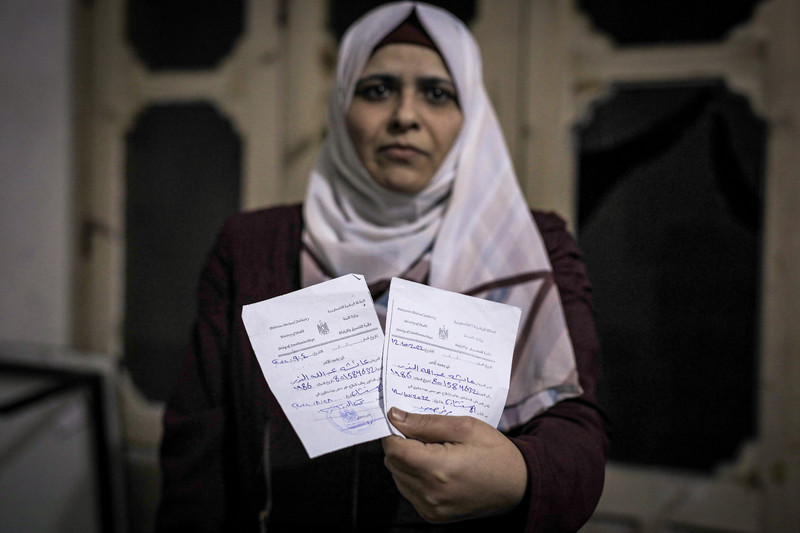
Aisha al-Nader was diagnosed with two types of cancer last year.  Mohammed Salem

Aisha al-Nader was diagnosed with breast cancer and lymphoma in April 2022.

The diagnosis came soon after Aisha – now aged 41 – learned that her efforts to become pregnant via fertility treatment had been unsuccessful.

“All I ever wanted was to experience the joy of being a mother,” she said. “Everything changed in the blink of an eye. Now it feels like I am waiting for death.”

Gaza-based doctors referred Aisha to Istishari Arab Hospital in the West Bank city of Ramallah.

But she was unable to keep an appointment set for July last year: Israel would not issue her a travel permit.

Her brother Hussein sought help from human rights groups.

A series of subsequent applications were made and a lawsuit was initiated. Israel still would not budge.

In January this year, doctors confirmed that Aisha’s cancer had spread. Further tests were deemed necessary to ascertain the full extent of the cancer yet the required equipment was not available in Gaza.

She was given a fresh appointment in Ramallah for late February, but Israel refused to issue a travel permit.

“My sister is slowly dying because of the blockade on Gaza,” said Hussein. “And the arbitrary decisions of the Israeli authorities.”

“Barely surviving”

A new study by the World Health Organization (WHO) notes that there has been a considerable variation in approval rates following applications for travel permits for Gaza’s patients over the past 15 years. The highest approval rate (94 percent) was recorded in 2012, the lowest (54 percent) in 2017.

From 2019 to 2021, just 65 percent of travel permits were issued in time for patients from Gaza to keep hospital appointments, the WHO study states.

Saadia al-Barim is extremely worried about the future of her children.  Mohammed Salem

In April 2021, doctors decided that Saadia al-Barim needed treatment outside Gaza for thyroid cancer. She was referred to al-Ahli Hospital in the West Bank city of Hebron.

Israel turned down four of her applications for travel permits before eventually granting her one.

The permit did not ensure a smooth journey. When she arrived at Erez, the military checkpoint separating Gaza and Israel, she was interrogated by Israeli soldiers for six hours.

“During that time, I felt like I was going to stop breathing,” the 51-year-old said.

Her condition worsened in 2022. After being referred for further treatment in Hebron, she received a travel permit last June.

She needs further treatment and has recently been referred to al-Makassed hospital in East Jerusalem.

So far this year, she has applied for three travel permits. All three have been denied.

“I am barely surviving,” she said.

A widowed mother of six, Saadia is extremely worried about her children’s future.

“Saleh, my youngest son is 12,” she said. “He is afraid of losing me, just like he lost his father when he was very young.”

Aseel Mousa is a journalist based in Gaza.

Source: Electronic Intifada

Posted in Blockade | Comments Off on Women with breast cancer denied treatment by Israel

Confronting Energy Poverty among Palestinians in Israeli-Besieged Gaza

( Al-Shabaka ) – Palestinians in Gaza are suffering from a worsening energy crisis due to the Israeli regime’s ongoing siege. As a result, they have adopted different coping strategies, including solar energy technology to offset electricity shortages. Al-Shabaka policy analyst and 2022 Visiting Gaza Fellow Asmaa Abu Mezied examines this reality, and offers recommendations for Palestinian leadership and stakeholders to promote Palestinian economic self-determination in Gaza.

Introduction

Since 2006, Palestinians in Gaza have suffered from a worsening energy crisis due to the Israeli regime’s unrelenting siege. As a result, they have sought alternative sources of energy that are funded by donor aid, as well as governmental and private-sector initiatives. While these schemes can provide Palestinians with short-term solutions to alleviate their energy needs, they fail to confront the fundamental obstacles imposed by the Israeli siege, thus depoliticizing the energy crisis and perpetuating the status quo.

Addressing the complexities of the energy crisis in Gaza is beyond the scope of this policy brief. Instead, it contextualizes Gaza’s wider energy crisis within the Israeli regime’s siege in order to look more closely at the enclave’s electricity crisis specifically, as well as the strategies Palestinians adopt to confront it, including solar energy technology. As the analysis makes clear, any attempt to adopt alternative energy sources within the context of economic siege places undue burdens on Palestinian households that are already suffering from limited access to basic needs. The brief ends with policy recommendations for Palestinian leadership, as well as the international donor community and environmental activists, to ease the energy crisis in Gaza and contribute to Palestinians’ economic self-determination.

Energy Under Siege

Israel’s policy of depriving Palestinians from access to energy is multifaceted across colonized Palestine, causing chronic energy poverty. In Area C of the West Bank, the regime bans Palestinians from connecting to power grids and denies them permits to install solar energy systems. In 2018, it also threatened to destroy solar energy projects in Areas A and B—ostensibly under the governance of the Palestinian Authority (PA)—for not being licensed according to Israeli law. In Gaza, not only does the Israeli regime deprive Palestinians of energy resources, it also targets the only diesel-based power plant in what amounts to political vengeance, systematically devastating Gaza’s economy and Palestinians’ livelihoods.

This is particularly worrying given Palestinians’ increasing reliance on energy imported from Israel. Indeed, between 2010 and 2020, Palestinians in the West Bank and Gaza increased their imports of electricity from the Israeli regime by 56%, representing 91% of total imported electricity. This is 11 times greater than electricity purchases from the Palestine Electric Company in Gaza. In 2017, Palestinian households and businesses, as well as the Gaza Power Generating Company (GPGC), spent $769.7 million (22% of Gaza’s GDP) on imported energy sources from the Israeli regime, including petroleum, diesel, gasoline, liquid propane gas, and electricity, among others.

However essential donor aid may be for Palestinians in Gaza, the absence of a plan to orient these investments towards self-determination for the Palestinians guarantees the protraction of the Israeli siege Click To Tweet

The supply of each source fluctuates based on prevailing political and economic conditions. For example, in 2017, the Israeli regime collectively punished Palestinians in Gaza following the PA’s refusal to pay energy bills. From a daily average of 120 megawatts (MW), Israel restricted its monthly supply of energy to Gaza to 70 MW per day during the last six months of 2017. Similarly, during its assault on Gaza in May 2021, Israel reduced its energy supply to Gaza to 86 MW per day.

Importantly, access to energy in Palestine—including imported energy sources such as fossil fuels, electricity, and renewable energy—is contingent on the stipulations of the 1994 Paris Economic Protocol (PEP), which ensures the Israeli regime’s control over the levers of the Palestinian economy. Indeed, clause 12 of the PEP conditions Palestinian imports of petrol to meet European and US fuel standards enforced in Israel. The PEP also stipulates that the difference between prices of petrol sold between 1948 territories, the West Bank, and Gaza should not exceed 15%. It has therefore become increasingly unaffordable for the PA to import fuel from other countries. As a result, Palestinians are paying the highest prices for energy in the region—despite consuming the lowest levels—which, in turn, exacerbates their financial burdens.1

The Vicious Cycle of Donor Aid

The international community’s refusal to hold the Israeli regime accountable ensures the perpetuation of Palestinian reliance on donor aid for basic needs. This includes energy resources that Israel blocks from Gaza and vital infrastructure that it destroys. Indeed, Israel has demolished donor-funded solar-power projects in Gaza’s industrial city and solar panels in Area C of the West Bank, yet donors continue to overlook these violations while pouring in aid to help Palestinians meet their humanitarian needs.

From 2006 to 2009, the EU provided the GPGC with fuel, while Qatar and Turkey offered grants to cover the cost of industrial diesel and the blue tax the Israeli regime imposes on Palestinian fuel purchases. And while the use of solar-powered energy has been steadily rising in Gaza as a result, 69.2% of the institutions that have adopted it since 2010 have indicated that it can only cover up to 20% of their energy consumption costs.

However essential donor aid may be for Palestinians in Gaza, the absence of a plan to orient these investments towards self-determination for the Palestinians guarantees the protraction of the Israeli siege. Ultimately, by continuing to sidestep Palestinian calls for sovereignty over their land and natural resources, and by continuing to shield Israel from accountability, donors do nothing more than entrench Palestinian oppression and energy poverty.

A Closer Look at the Electricity Crisis

Structural Issues

In 2020, 83.8% of the electricity supply in the West Bank and Gaza, and almost all its fuel demand, was imported from the Israeli regime. The rest was imported from the Palestinian Electricity Transmission Company (5.3%) and Jordan (2.6%). The remaining supply (8.3%) was purchased locally from the Palestine Electric Company through the GPGC. In Gaza specifically, electricity from GPGC constituted just 35% of purchased electricity in 2020, while the rest was imported from the Israeli regime.2 The besieged enclave’s electricity supply from the GPGC is contingent on the availability of funds to purchase diesel to power the plant. In 2021, the Israeli regime further restricted the entry of fuel to Gaza for a month following its May 2021 ceasefire with Hamas. Consequently, the GPGC could only operate at half capacity most of the time, producing an average of 65 MW per day.

Energy poverty in Gaza means that many women work more hours in unpaid household labor, leaving them with little or no discretionary time…this creates increased stress and pressure, often leading to mental health struggles Click To Tweet

In addition to the restrictions on electricity supply, the overall demand for electricity in Gaza is increasing with population growth. Households register the highest percentage of electricity consumption (60.69%) compared to the industrial, transport, and commercial sectors. In 2021, while the daily average demand for electricity was 500 MW, the average supply was only 190 MW (120 from Israel and 70 from the GPGC), resulting in a deficit of 310 MW. This deficit is a chronic crisis affecting almost all Palestinian households in Gaza.

The electricity crisis is worsened by frequent outages, which hinder the ability of public-sector institutions to provide basic services related to water and waste management, healthcare, and education. For example, wastewater treatment plants in Gaza are often unable to process sewage due to electricity shortages, resulting in a significant daily amount of partially treated water being dumped into the Mediterranean Sea, threatening marine life and Gaza’s vital fishing industry.

Via hosny_salah at Pixabay

Healthcare provision is also severely impacted by power shortages. Indeed, hospitals in Gaza are often forced to postpone non-emergency surgeries, with waiting times reaching 16 months in 2021 compared to three months in 2005. Educational institutions are likewise impacted; this was particularly acute during the COVID-19 pandemic, when frequent power outages left teachers unable to use classroom technologies and many students were forced to study by candlelight.

The electricity crisis is also impacting the private sector. Some businesses have been forced to scale down operations or cease operating altogether. Others have reported a 30% increase in operational costs for securing electricity from alternative sources during outages. This has resulted in depleting profit margins and discouraging further investments in Gaza’s private sector. For workers, the situation is even more precarious, with many either forced to accommodate their working hours to the electricity schedule in businesses and factories, or to accept reductions in their daily wages due to shortened working hours.

Disproportionate Effects on Women

The structural issues outlined above also highlight the direct correlation between energy poverty and the perpetuation of gender inequality in Gaza. For example, some companies exploit the crisis to justify refusing to employ women under the pretext that they would not be able to work night shifts in the event of a power outage during the day. This is due to the patriarchal expectation that women in the labor force should work shorter hours and only during the daytime.3

The shortage in electricity also has a severe impact on household labor, for which Palestinian women, like women all over the world, are disproportionately responsible. Indeed, energy poverty in Gaza means that many women work even more hours in unpaid household labor, leaving them with little or no discretionary time—a phenomenon known as time poverty. In turn, this creates increased stress and pressure, often leading to mental health struggles.

Furthermore, many women rely on homemade food processing techniques, such as cheese production. Frequent electricity outages damage electrical appliances needed for these techniques, leading to spoilage and unaffordable repair costs that place serious financial burdens on the family and home-based businesses. In addition, because of the risks of food-born diseases that can result from perishable foods not properly stored during lengthy electricity outages, women are often forced to cook all the food to avoid spoilage. As a result, they are often compelled to rely on canned foods to feed their families, or to cook and bake using wood, exacerbating health and environmental problems.

Moreover, electricity is vital in helping Palestinians in Gaza navigate the worsening climate crisis, which is causing extreme temperatures. As a result, Palestinians are increasingly relying on electrical appliances, such as fans and air conditioning units, to alleviate the stifling heat in the summers, and on heating units to survive the bitter winter cold. Living under these climate conditions with limited electricity affects women in particular, as they generally carry the burden of caring for their homes and families, especially children and older adults. Ultimately, while all Palestinians in Gaza are suffering from the consequences of energy poverty, the effects on women are undoubtedly disproportionate due to prevailing gender inequalities.

Palestinian Coping Strategies 

A 2021 study found that the monthly energy bill for half of the sampled Palestinian households in Gaza ranged between 150-300 NIS ($40-80), amounting to one-fifth of Gaza households’ average monthly income of 1,260 NIS ($342). As a result, Palestinians in Gaza have been developing methods to conserve electricity, allowing them to shrink their consumption by half that of Palestinian households in the West Bank.

Palestinians in Gaza are no strangers to solar-powered energy. Thanks to a daily average of eight hours of sunlight, 88% of families in Gaza owned solar thermal water heaters in 2004, a practice they adopted in the 1970s. While more recent figures on the scale of solar water heater use in Gaza are not available, in 2015, 56.5% of Palestinian households in the West Bank and Gaza used solar water heaters; in 2017, researchers found that solar water heaters saved Palestinians in Gaza 24.8% of their annual electricity bills.

Solar Photovoltaic Energy as an Alternative to Electricity 

Since 2013, some Palestinians in Gaza who can afford to do so started adopting solar photovoltaic (PV) technology, either by connecting to an existing electricity grid (on-grid system), through a hybrid model, or entirely off-grid. Unlike solar thermal panels, which convert solar radiation into heat, PV technology converts sunlight to electricity, thus allowing households to power electrical appliances in addition to heating water. Although existing estimates about the contribution of PV technology to the electricity supply in Gaza are unreliable, researchers were able to determine that the number of PV systems installed in Gaza increased from 591 in 2015 to 8,760 in 2019, while solar panel surface space increased from 115 square meters in 2012 to 20,000 square meters in 2019.4

The discussion of solar energy adoption as a solution to the energy crisis in Gaza must be reframed from a technical issue to a political one, with justice and liberation for Palestinians at its core Click To Tweet

Despite its potential, PV technology is costly. The price of installing an off-grid PV system of one kilowatt (KW) is between $1,000-2,500, excluding maintenance costs. Such systems cover household illumination, while operating other electrical devices such as fridges, fans, and washing machines requires a larger capacity of three KW at a cost of $3,000-5,000. By contrast, one KW of an on-grid system—widely used in the West Bank—ranges
between $850-1,000.5

Beyond costliness, the Israeli regime has sporadically restricted the entry of materials needed to install solar energy equipment over the past two decades. Moreover, its successive attacks on Gaza have destroyed necessary infrastructure for PV system installation, including residential buildings needed to house a rapidly expanding population, expected to reach 3.1 million in 2030. Combined with diminishing land and roof space, these realities render it extremely challenging for most Palestinians in Gaza to consider adopting PV technology.

Indeed, Palestinians in Gaza generally support the use of solar energy as a means of reducing household expenditures and coping with power outages. However, they point out that accessibility and affordability are the main obstacles to doing so. For example, solar energy suppliers indicate that while donor aid has largely covered the costs of PV system installations in marginalized communities in Gaza, the systems operate at minimal capacities (one KW), only sufficient for lighting. Moreover, public-sector employees working in the health sector indicated that the maximum amount of money they can set aside for solar system installation is 5,000 NIS ($1,360), which is less than the amount needed to purchase one KW.

Access to alternative energy sources, especially electricity, is thus a costly luxury. In a society fraught with increasing socioeconomic divisions, many cannot afford the expenditure. Instead, families in villages and refugee camps depend on candles and gasoline stoves to power their households during outages—cheaper alternatives that can be hazardous and life-threatening. Indeed, between 2012 and 2022, 35 Palestinians in Gaza were killed, and 36 injured—mostly children and women—due to fires caused by candles and/or other open flames.

Governmental and Private-Sector Initiatives 

As part of its strategic plan for 2020-2030, the Palestinian Energy and Natural Resources Authority (PENRA) ambitiously set out to produce 500 MW of power by 2030, 80% of which would be produced by solar power at a cost of $650-734 million. The PA also issued decrees in 2015 and 2017 to encourage private-sector investment in renewable solar energy. These decrees provided investment and tax incentives to companies generating electricity from renewable sources such as feed-in tariffs and net metering (only the latter is implemented in Gaza).

However, the Israeli siege and the political division between Fatah and Hamas create disparity in implementing these green financing initiatives in Gaza. Indeed, initiatives by PENRA and private companies like the Palestine Investment Fund to encourage household adoption of solar energy have mainly extended to the West Bank. As an example, SUNREF, an EU-sponsored project, provided 25 million euros in interest-free loans to private-sector companies to invest in renewable energy between 2017 and 2021;6 Gaza-based companies only received around 6% of these loans.7 As a result, the adoption of solar-powered energy technology in Gaza has largely been limited to healthcare facilities, state institutions, and private businesses that can afford the installation and operational costs.

But extending loans to households would not solve the problem. The Gaza Solar Revolving Fund, launched by the World Bank and PENRA, is an initiative aimed at providing small businesses and households with interest-free loans. However, the political division between Fatah and Hamas continues to alienate many Palestinians from their leadership, especially due to government cuts to public employees’ salaries. As a result, the Gaza Solar Revolving Fund initiative, like others, has seen low consumer buy-in, even with the option to pay in installments.

Indeed, the Gaza Electricity Distribution Company also launched a project offering solar system installation for households payable in monthly installments. However, the cheapest package is 6,956 NIS ($1,892) over 28 months, which is beyond the maximum amount public-sector employees reported they can set aside for solar energy systems. More companies have followed suit, providing installment payment schemes to encourage consumer buy-in with limited success.

Moreover, the existing requirements for qualifying for green financing—including proof of employment, a regular salary, and a registered bank account—mean that few Palestinians in Gaza can apply, leaving the majority reliant on the Israeli regime and/or donor aid for access to electricity. This highlights the critical gap between private sector, donor, and governmental policies, and the needs of the Palestinian people in Gaza. Despite the initiatives implemented by the PA to alleviate energy poverty in Gaza, they have been limited in scope and implementation.

Recommendations 

It is imperative to understand the rights of Palestinians in Gaza to access energy within the contexts of the Israeli siege, the Palestinian political divide, and donor complicity. The discussion of solar energy adoption as a solution to the energy crisis in Gaza must therefore be reframed from a technical issue to a political one, with justice and liberation for Palestinians at its core:

  • Palestinian leadership, environmental activists, and the donor community must focus their advocacy efforts on pushing for punitive measures against the Israeli regime, and promoting Palestinian political and economic sovereignty.
  • PENRA must extend its solar energy initiatives to marginalized communities in Gaza, which would require coordination between Palestinian political leaders. This includes encouraging investment in community-based solar energy systems and pushing municipalities to work in conjunction with PENRA to incentivize households to transition to solar energy through offering tax exemptions.
  • Municipalities and local ministries must work with PENRA to integrate the design of diversified energy sources in urban planning and reconstruction projects in Gaza. This includes allocating governmental lands (including waqf lands) for the development of solar energy systems, especially in areas with limited electricity infrastructure.
  • PENRA and other public authorities must push for private-sector provision of solar energy solutions. This includes offering government subsidies and tax incentives, as well as using publicly owned lands for solar energy projects.
  • In order to ascertain the scope of the ongoing energy crisis, the Palestinian Central Bureau of Statistics and Palestinian energy research centers must: map and register all solar energy systems installed in Gaza to ensure official and reliable statistics; cover issues of gender, socioeconomic conditions, and household demographics, among others; and ensure that this data informs all green financing initiatives and solar energy projects implemented in Gaza.
  1. Meanwhile, the Israeli regime continues to advance its greenwashing efforts, including at the regional level. Solar energy projects are part of these efforts, with Israel standing to gain up to 1.6 billion NIS ($435 million) through them.
  2. Gaza’s electricity is derived from three main sources: electricity lines from the Israeli regime with a supposed capacity of 120 MW per day; electricity lines from Egypt with a capacity of 30 MW per day; and electricity supplies from the diesel-powered GPGC, with a capacity of 140 MW per day.
  3. This information is based on an interview the author conducted with an expert on women’s employment in the private sector in Gaza.
  4. The private sector (including manufacturing companies, hospitals, large supermarkets, and so on) and individual Palestinian households in Gaza are adopting solar PV technology at the highest rate.
  5. This information is based on interviews the author conducted with different stakeholders, including solar energy experts and suppliers.
  6. SUNREF II, launched in 2022, has pledged 50 million euro in green grants.
  7. This information is based on interviews conducted with PENRA authorities and private-sector solar energy suppliers.
Posted in Blockade | Comments Off on Confronting Energy Poverty among Palestinians in Israeli-Besieged Gaza

UN breathes life into once-polluted Gaza wetland

Development Program removes 35,000 tons of garbage from Wadi Gaza, plans sports and leisure facilities, as clean water flows in from new treatment plant

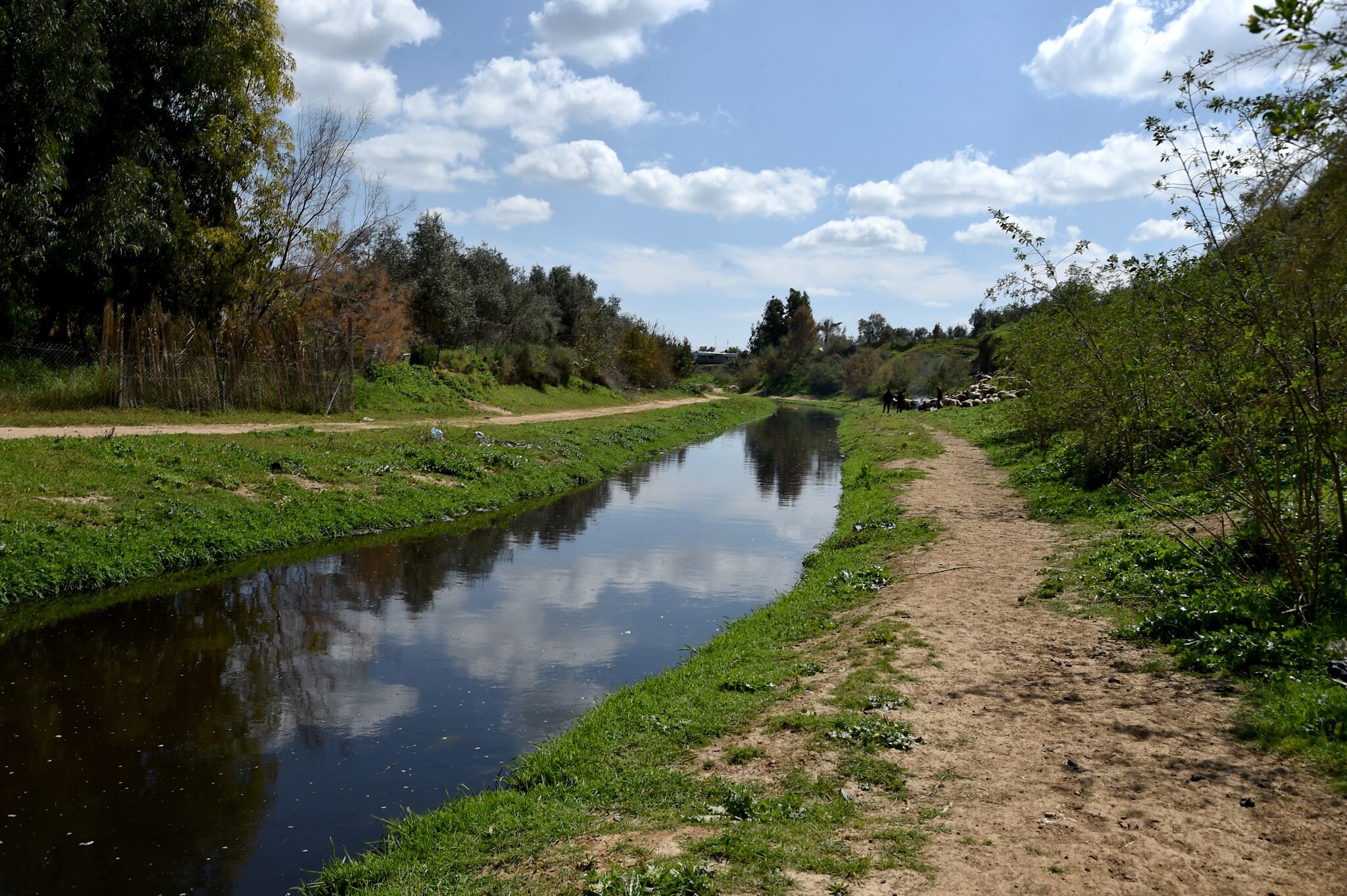
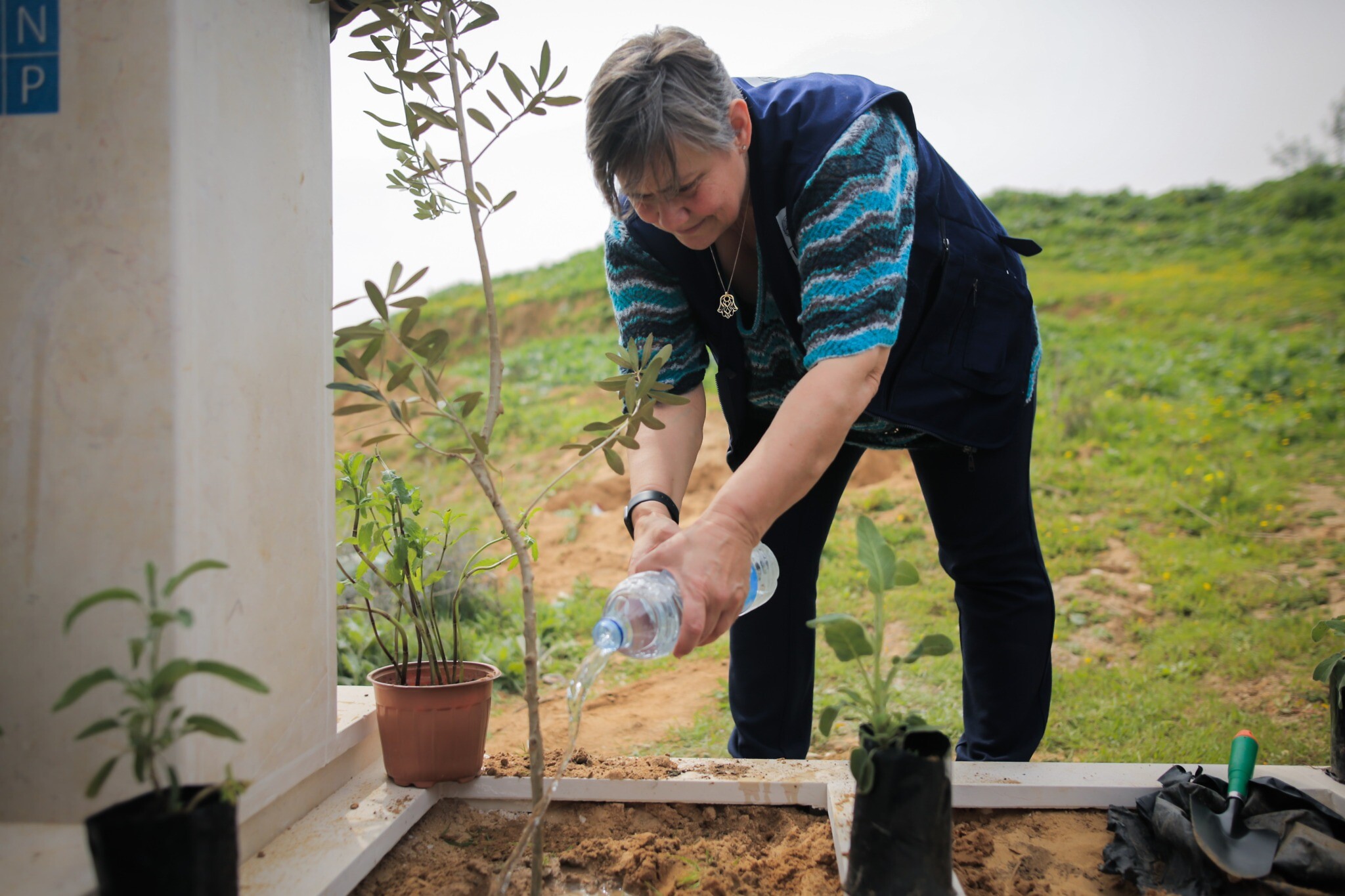
A cleaned-up section of Wadi Gaza. (UNDP/PAPP image bank -- Shareef Sarhan)

A cleaned-up section of Wadi Gaza. (UNDP/PAPP image bank — Shareef Sarhan)

The Gaza Strip’s only wetland is slowly coming back to life.

This is good not only for the Strip’s battered ecosystems, and some of the 500 million birds that migrate through Israel and the Palestinian territories twice each year.

It means that a green leisure and recreation site stretching nine kilometers (5.6 miles) is taking shape for the benefit of a population facing some of the most difficult pressures on Earth.

A whopping 35,000 tons of garbage have been removed from the wetland, known as Wadi (valley) Gaza, and water is flowing in again, thanks to a sewage treatment plant built by Germany.

“A lot of people are coming out of curiosity, and to stretch their legs,” Yvonne Helle, who heads the UN project to rehabilitate the valley, told The Times of Israel.

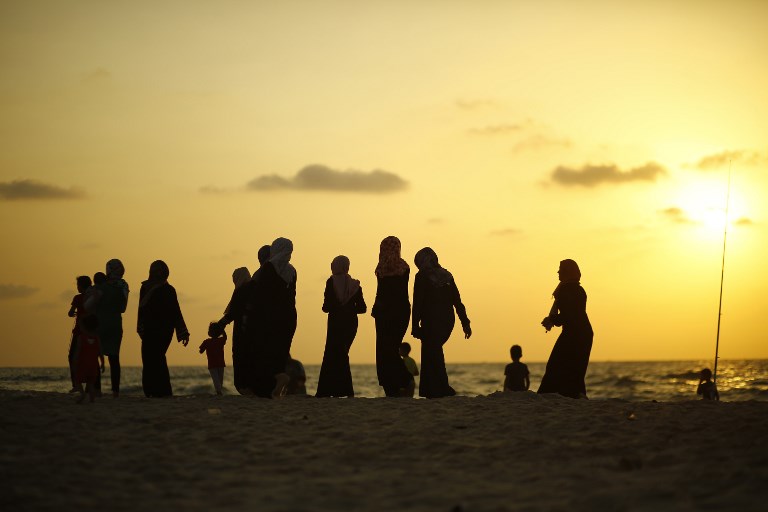
“It’s an ideal place for bird watching, hiking, getting together, and spending time healthily. And it’s a really important place where women can go to relax – right now they only have the beach.”

Palestinian women and children walk along the beach in Gaza City on September 21, 2017. (AFP PHOTO / MOHAMMED ABED)

Home to more than two million people, most of whom live below the poverty line and are unemployed, the Gaza Strip is one of the most densely populated places on the planet.

It has been blockaded for 18 years by Israel and Egypt since the Islamist terror group Hamas, which is sworn to the Jewish state’s destruction, took power. Israel says the blockade is needed to limit Hamas’s ability to arm itself for attacks against Israeli citizens.

The Strip is usually in the news either because Hamas or Islamic Jihad have fired rockets into Israel, or Israel has carried out retaliatory bombing raids against terrorist targets.

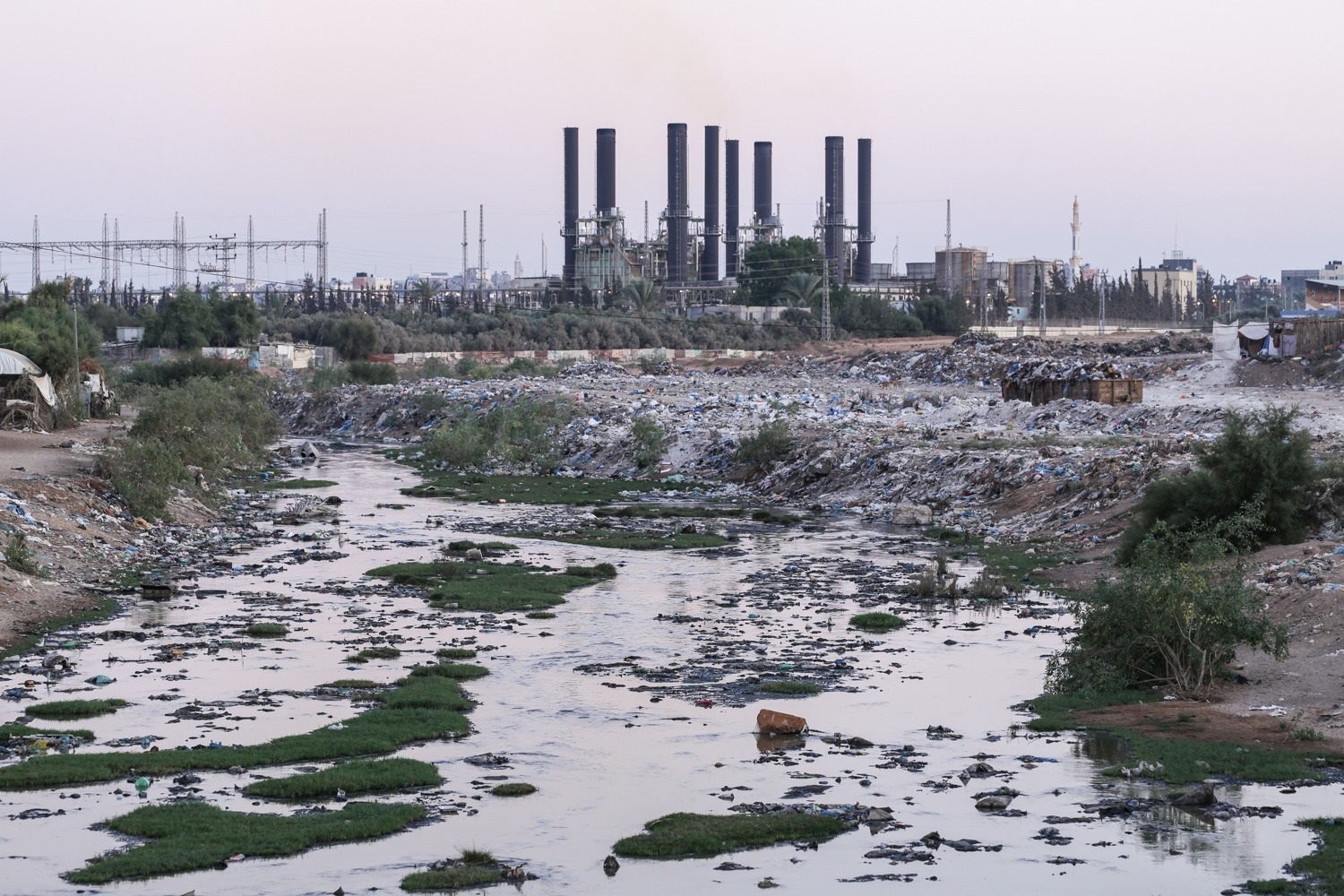
Behind the headlines, its environment is a mess, and Wadi Gaza, in the center of the Strip, has been no exception.

Located in central Gaza, the wetland is naturally sustained by rainfed springs that start more than 100 kilometers (62 miles) to the east, in the hills near Hebron in the West Bank. Within Gaza, it twists and turns before spilling into the Mediterranean Sea.

But with water scarce in the region, and Israeli reservoirs diverting much of it before it reached the enclave, the wetland remained dry for years, only receiving water during rainy winters when Israel opened the dams or undertook maintenance.

As urban areas crept toward the valley, their populations turned the once fertile and flourishing space into a mosquito-ridden dumping ground for garbage — everything from old electrical appliances and furnishings to raw sewage.

Before the cleanup: Wadi Gaza full of garbage and raw sewage. (UNDP/PAPP image bank)

“The smell was terrible,” Helle recalls. “It was an open sewer. Now, it doesn’t smell at all.”

The UNDP hopes the wadi’s rehabilitation will provide badly needed open space for Gazans, as well as jobs in everything from agriculture and tourism to small businesses.

The organization finalized a master plan in 2019 that outlined five core areas for development. It began implementation last year.

Facilities planned for the core areas include playgrounds, cafeterias, a restaurant, parking lots, a biodiversity museum, a botanical garden, birdwatching towers, a sports area with a gym and facilities for games such as tennis, an amusement park and a camping area.

So far, according to Helle, the special representative of the UN’s Program of Assistance to the Palestinian People (PAPP), workers have cleared garbage from the wadi, and are now sifting the sand for plastic debris that is harder to see.

The same, previously polluted section of Wadi Gaza pictured above, after a major cleanup. (UNDP/PAPP image bank)

As this year progresses, the first section of a flood protection embankment will be built and some 40,000 square meters (more than 430,000 square feet) will be planted with 15 species of native trees.

Through 2024-2025, flood protection and planting work will continue, solar-powered lighting will be installed, and community awareness programs will be deepened.

UNDP has already engaged social media influencers to promote the site, with the result that many young people are starting to visit, according to Helle.

Yvonne Helle, who heads the UN project to rehabilitate the Gaza wetland, takes part in a planting activity, March 8, 2022. (UNDP/PAPP Image Bank)

It is organizing guided tours for groups ranging from women to international missions, and giving participants clay balls full of native plant seeds that can be tossed onto the earth to encourage the return of flora.

Representatives of the five municipalities that border the valley are now working together, alongside Palestinian officials responsible for coastal and water management and representatives of the German government, which has been working for years to improve Gaza’s water supply.

Getting the interested parties together is seen as critical to ensuring that the wadi is well-managed and remains clean in the years to come.

Another section of Wadi Gaza shown before and after cleaning. (UNDP/PAPP image bank)

After 20 years of planning, a new top-of-the-line German-built sewage treatment plant, designed to treat the effluent of a million Gazans, started operating in early 2021.

It promises an initial water flow into the wadi of up to 60,000 cubic meters per day — a quantity eventually set to double.

With treated water flowing into the sea, it also means that the beach at the wadi’s mouth is now clean and safe.

“The water (which goes through three levels of purification) is of such quality that it’s better than anything we’ve had in a long time,” said Helle.

“The moment there’s permanent water in an area, it changes the flora and fauna,” she went on. “It’s early days, but we hope that with the changing flora, there will also be a changing fauna.”

A flock of migrating birds are silhouetted against a cloudy sky as they fly over the Lebanese capital Beirut, October 5, 2015. (AP Photo/Hassan Ammar)

UNDP has already carried out a baseline study on migrating birds against which to measure progress, and is talking to UNESCO about a project to study the return of these birds.

This, it is hoped, might help to get the wadi off UNESCO’s tentative list of world heritage sites and onto the permanent one.

Given that the Strip’s power infrastructure has been crippled in the past by war and shortages of fuel, the Germans have equipped the sewage treatment plant with backup energy in the form of biogas and a solar energy plant.

But many other factors can slow or even reverse the successes.

Workers in Wadi Gaza use a wooden contraption to separate waste from sand. (UNDP/PAPP – Shareef Sarhan)

These include the complex geopolitical situation, interested parties trying to get their hands on plots of valley land for commerce or agriculture, and difficulties importing materials. Israel sometimes restricts entry into the Strip of building materials that could be used by Palestinian terror groups for military purposes.

Furthermore, just $9.3 million out of the necessary $50 million has been raised, from the governments of Norway, Belgium and Japan.

“For us to be able to continue we need to mobilize the funding,” said Helle. “It’s a complex program with a lot of moving parts.”

Posted in Blockade | Comments Off on UN breathes life into once-polluted Gaza wetland
Il logo dell’Organizzazione Mondiale della Sanità

https://msf.org.uk/article/palestine-new-msf-report-reveals-health-impact-coercive-measures-masafer-yatta

Sharmila Devi

20 maggio 2023, The Lancet,

L’OMS afferma che l’occupazione, le divisioni politiche, la frammentazione, il blocco e gli ostacoli alla circolazione continuano a limitare l’accesso ai servizi sanitari. Lo riferisce Sharmila Devi.

Secondo due nuovi rapporti pubblicati dall’OMS il 9 maggio 2023, notevoli ostacoli continuano a impedire il diritto alla salute nel territorio palestinese occupato, tra cui “occupazione in corso, divisioni politiche… ostacoli fisici al movimento e attuazione di un regime di permessi”.

I rapporti sono stati diffusi durante uno dei peggiori conflitti degli ultimi anni tra Israele e la Jihad islamica palestinese, che ha provocato la morte di almeno 33 persone nella Striscia di Gaza e due persone in Israele. Un cessate il fuoco avrebbe dovuto entrare in vigore alla fine del 13 maggio.

I rapporti dell’OMS documentano 750 attacchi a strutture e personale sanitario registrati nella Striscia di Gaza e in Cisgiordania dal 2019 al 2022, che hanno provocato la morte di un operatore sanitario e il ferimento di 568, con 315 ambulanze e 160 strutture sanitarie colpite. “Nel 2022, abbiamo visto il maggior numero di palestinesi uccisi dalle forze di sicurezza israeliane dal 2005, spesso a seguito di un uso eccessivo della forza”, Ajith Sunghay, capo dell’Ufficio dell’Alto commissario delle Nazioni Unite per i diritti umani (OHCHR) nei Territori palestinesi occupati, si legge in un comunicato stampa. “Questa tendenza è aumentata solo nel 2023. L’OHCHR e l’OMS hanno documentato che le forze israeliane hanno spesso impedito l’accesso alle cure mediche, anche per le squadre di prima risposta per raggiungere le persone con ferite potenzialmente letali”.

Dal 2019 al 2021, solo il 55% dei farmaci essenziali era disponibile nel Central Drug Store del Ministero della Salute nella Striscia di Gaza, secondo il rapporto Diritto alla Salute dell’OMS. Il rapporto invitava Israele a “porre fine al ritardo arbitrario e alla negazione dei permessi per i pazienti palestinesi”, in tutto il territorio palestinese occupato.

Solo il 65% delle richieste dei pazienti di uscire dalla Striscia di Gaza per raggiungere Gerusalemme Est, Cisgiordania, Giordania o Egitto per cure mediche sono state approvate da Israele e le ambulanze hanno dovuto affrontare un tempo medio di attesa di 68 minuti al valico di Erez tra Israele e il Striscia di Gaza. L’OMS ha anche espresso preoccupazione per i 385 interrogatori da parte delle forze di sicurezza israeliane di pazienti e dei loro compagni che hanno lasciato la Striscia di Gaza per ricevere cure mediche nel 2019-21.

La Striscia di Gaza è sotto il blocco israeliano dal 2007, quando il gruppo militante Hamas vinse le elezioni parlamentari palestinesi. Un governo palestinese separato sotto il presidente Mahmoud Abbas amministra la Cisgiordania. Sebbene i tassi di approvazione israeliana dei permessi per pazienti e accompagnatori dalla Cisgiordania fossero superiori a quelli della Striscia di Gaza, tra il 2011 e il 2021 sono state negate 331.678 domande di permesso dalla Cisgiordania.

L’altro rapporto dell’OMS, Palestine Voices 2022 to 2023, ha documentato l’impatto delle barriere all’accesso sanitario sui palestinesi. Fatma, una bambina di 19 mesi della Striscia di Gaza, è morta il 25 marzo 2022, dopo che le era stato ritardato l’accesso alla cardiochirurgia salvavita per quasi 3 mesi. Fatma è nata con una condizione cardiaca congenita nota come difetto del setto atriale e aveva bisogno di un intervento chirurgico presso il Makassed Hospital di Gerusalemme est. La sua famiglia ha chiesto tre volte i permessi per raggiungere gli appuntamenti in ospedale, ma le sono stati negati.

“Ci sono problemi sistemici che colpiscono gli operatori sanitari di Gaza e influiscono sull’accesso delle persone a un’assistenza sanitaria di qualità”, ha detto a The Lancet Sarah Davies, portavoce del Comitato internazionale della Croce Rossa a Gerusalemme.

“La regolare carenza di farmaci per il trattamento di malattie croniche, come il cancro, le malattie renali o il diabete nelle strutture sanitarie pubbliche a causa delle risorse limitate delle autorità sanitarie è ulteriormente complicata dalle difficili procedure di importazione. Questa restrizione alla circolazione di persone e merci dal 2007 impedisce anche agli operatori sanitari specializzati di ricevere una formazione iniziale e continua per garantire che le loro competenze rimangano all’interno delle linee guida delle migliori pratiche.”

Al 15 maggio, il Coordinatore delle attività governative nei Territori, l’organo del ministero della difesa israeliano che sovrintende agli affari civili nei Territori palestinesi occupati, non ha commentato i rapporti dell’OMS.

“Questi rapporti servono come duro promemoria del fatto che la comunità internazionale deve agire con urgenza per alleviare le sofferenze degli abitanti di Gaza e garantire il rispetto del loro diritto all’accesso a un’assistenza sanitaria di qualità. Non possiamo stare a guardare mentre queste violazioni dei diritti umani continuano ad avvenire”, ha dichiarato a The Lancet Aseel Aburass, coordinatore dei progetti e della ricerca per i Medici per i diritti umani in Israele.

Un rapporto pubblicato da Medici Senza Frontiere (MSF) il 4 aprile, ha dettagliato l’impatto sulla salute delle misure militari israeliane a Masafer Yatta e dintorni, un’area della Cisgiordania dove, nel 2022, la Corte Suprema israeliana ha consentito lo sfollamento forzato dei palestinesi per far posto a una zona militare. Secondo il rapporto, ai pazienti veniva regolarmente negato l’accesso ai villaggi in cui MSF fornisce servizi medici se la loro carta d’identità mostrava che provenivano da un altro villaggio.

Il 15 maggio, l’ONU per la prima volta ricordato ufficialmente con eventi e incontri a New York il 75° anniversario della Nakba, che significa catastrofe in arabo e si riferisce allo sfollamento di massa dei palestinesi quando Israele fu fondato nel 1948.

Per la commemorazione ONU della Nakba vedere https://www.un.org/unispal/nakba75/

Traduzione di Angelo Stefanini

Per i due rapporti dell’OMS vedere https://www.emro.who.int/opt/information-resources/right-to-health.html

Per il rapporto di MSF vedere https://msf.org.uk/article/palestine-new-msf-report-reveals-health-impact-coercive-measures-masafer-yatta

Posted on by crew | Comments Off on I palestinesi continuano a dovere affrontare barriere sanitarie

In Gaza, the trauma continues

Last Tuesday Israel launched a series of airstrikes on the Gaza Strip, the first of which killed three members of Islamic Jihad and nine civilians. An Egypt-mediated ceasefire came after five days and the deaths of more than 33 Palestinians, including six children. This unrelenting suffering will continue to cast a long shadow over the population of Gaza.

by Yasser Abu Jamei, 15 May 2023

wenty years ago, when I was beginning my career as a young doctor in Gaza, I watched children playing in the streets. One boy pretended to confront imaginary Israeli army jeeps, while the other, mimicking an Israeli soldier, chased him. They were imitating what they experienced in their daily lives.

Today, in the play therapy room at the Gaza Community Mental Health Programme (GCMHP) where I work, I watch children play with toy tanks and fighter jets. Though we have every variety of toy imaginable, these are what many children choose. As they did in their play decades ago, children continue to enact what they live. Yet what they live has grown increasingly violent and traumatic but I hope that the situation will not get worse.

This traumatising violence was on full display last summer during Israel’s bombardment of Gaza, a small, overcrowded slice of Mediterranean coastal territory that has been under Israeli military occupation for 56 years and under a crippling Israeli imposed siege and naval blockade for 15 years. The more than two million Palestinians trapped in Gaza have nowhere to run or seek protection when Israeli bombs start dropping. Last summer’s offensive killed 46 people, 16 of them children, in three days. More than 150 children were among the injured.

Children in Gaza had not yet psychologically healed from the previous large-scale Israeli bombardment in May 2021. Moreover, since 2008, there have been five devastating Israeli assaults on Gaza and numerous smaller ones. Recently, Save the Children released a report in which they found that 80% of children in Gaza reported signs of emotional distress. With approximately 1,000,000 children in Gaza (47% of the population), this translates to 800,000 children living with fear, depression, anxiety, grief — and this was before the most recent violence.

In the months and years to come, there will be more kids who are afraid to separate from their parents. Children will resume bedwetting, experience nightmares or other sleep disturbances. There will be an increase in children who act out aggressively, and in those who shut down entirely. Kids will have trouble concentrating in school. Some may develop suicidal thoughts.

As a mental health professional, I understand the typical trajectory of trauma and recovery. A population lives in safety. The traumatic event occurs. The population’s safety is disrupted, and the threat of harm is acute. Then, help and support arrives, the threat subsides, and the population’s central task is to resume normal life so that healing can begin.

No aspect of this applies in Gaza. Life before the latest bombardment was already defined by ongoing trauma, spanning generations. Two-thirds of Gaza’s population are refugees or descendants of refugees who were expelled from what became Israel in 1948 and denied their right to return. Add to that over half a century of brutal Israeli military rule, and a decade and a half of siege and blockade — which have been condemned by the UN and human rights groups as collective punishment of the entire population and illegal. As a result of this man-made humanitarian disaster, there is a dire shortage of clean water, electricity, and medical supplies. People are unable to travel abroad or to the West Bank to access life-saving medical care, to study, work, or visit family and friends. This has all contributed to endemic poverty. Over half the population of Gaza is impoverished with an unemployment rate of 44.7%, which is even higher for young people.

How can there be a return to ‘normal life’ when conditions here are so dire that the UN has issued repeated warnings that Gaza may soon become unliveable? How can our children recover a sense of safety when they’ve never felt safe? Even after the ceasefire, Israeli military drones buzzing regularly overhead trigger their traumatic memories, heightened by the knowledge that another assault is inevitable. At GCMHP, we do our best to address this trauma and bring hope but the ongoing reality of violence and deprivation stifles healing processes.

I don’t want Gaza’s children — including my own kids — to merely survive. I want them to thrive and reach their full potential in peace, security and freedom, as all children should be able to do. It is our duty as mental health providers, teachers and parents to support these children. Repeatedly traumatising them and depriving them of the essentials of life doesn’t benefit anyone, including Israelis.

The US and the international community must pressure Israel to finally end the blockade, respect human rights, and to stop its attacks on Gaza, so that Gaza’s children know something other than violence, deprivation and fear.

Yasser Abu Jamei

Posted in War | Comments Off on In Gaza, the trauma continues

Humanitarian situation in Gaza Flash Update #5 as of 17:00, 15 May 2023

KEY POINTS

  • The ceasefire in Israel and Gaza took effect at 22:00 on 13 May 2023, bringing to a halt the latest escalation of hostilities that began on 9 May 2023. It has largely held.
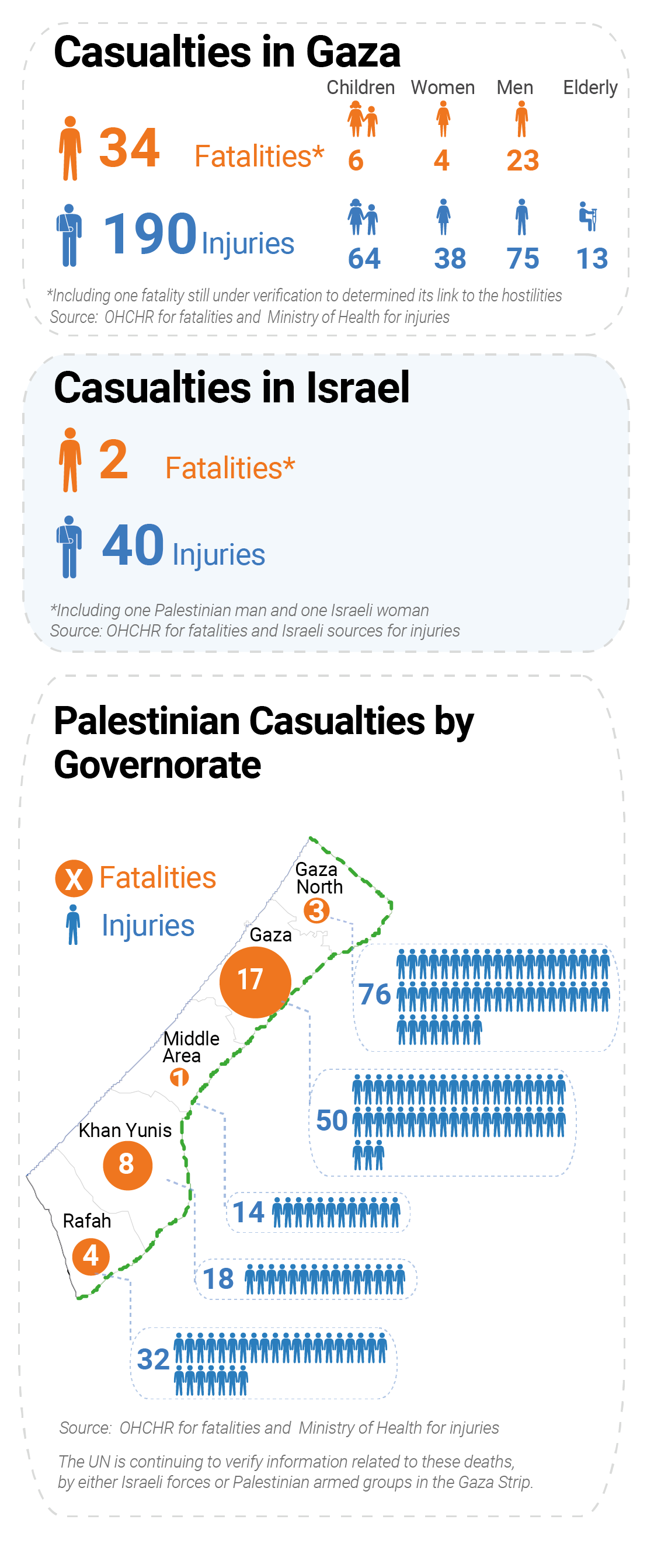
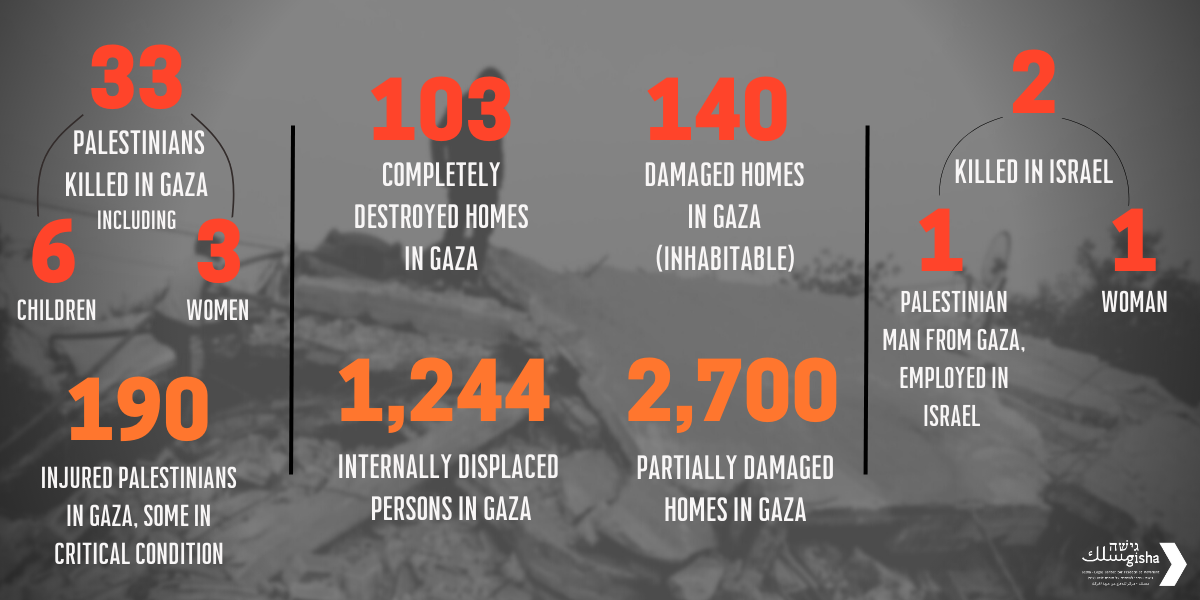
  • In the Gaza Strip, the United Nations Human Rights Office (OHCHR) has verified 33 Palestinian fatalities from 9 to 14 May; one additional fatality is still under verification. Out of the verified fatalities, at least 12 were civilians. Among the 12 civilians were four girls, two boys, four women and two men. According to the Ministry of Health (MoH) in Gaza, 190 Palestinians were injured, including 64 children and 38 women.
  • In Israel, one Israeli woman and one Palestinian worker from Gaza were killed and at least 40 physical injuries were reported by Israeli medical sources.
  • On 14 May, Israeli forces began the gradual easing of the closure placed on Erez and Kerem Shalom crossings with Gaza since 9 May, allowing the movement of the commodities that were authorized prior to the escalation, including fuel.
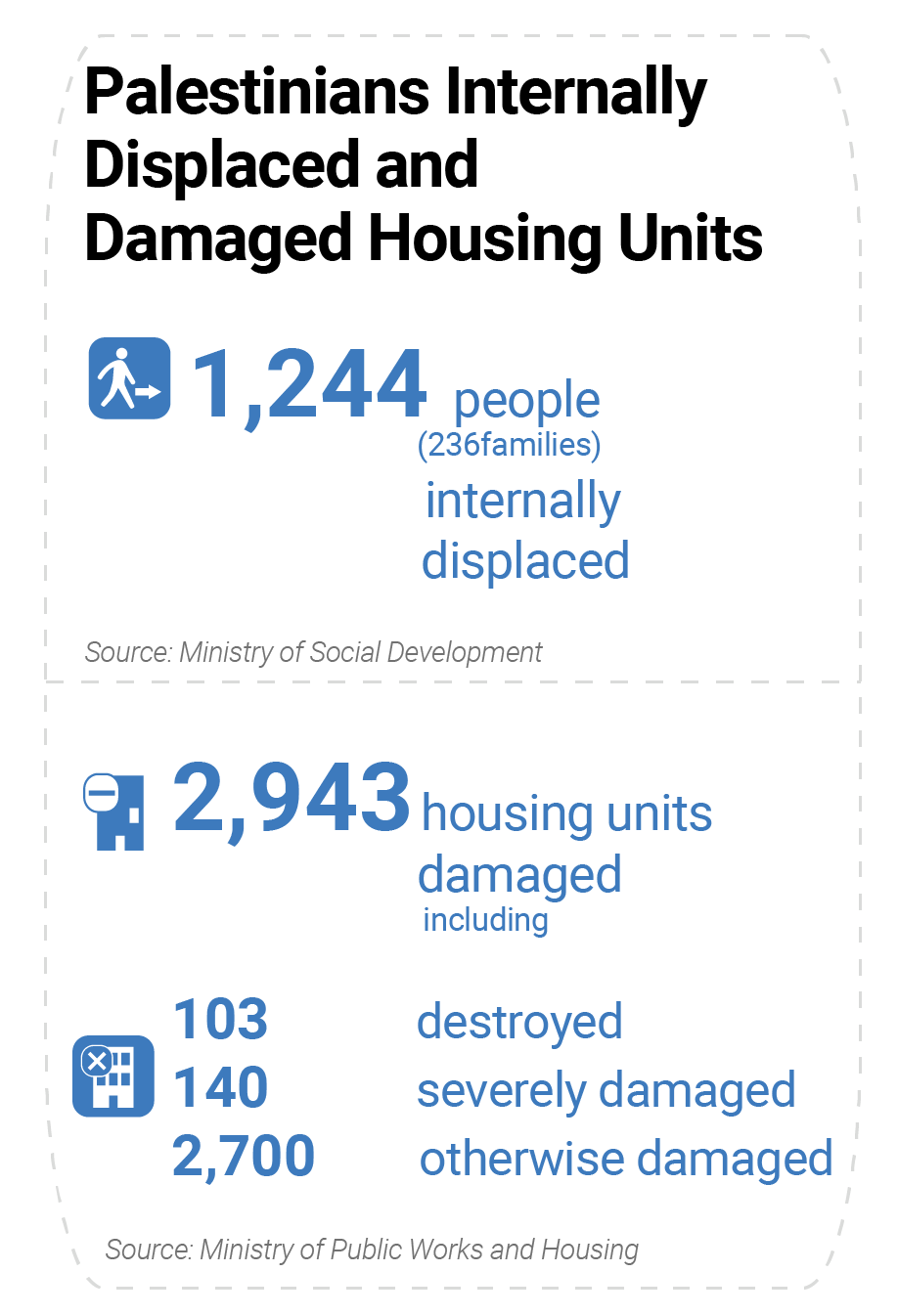
  • The Ministry of Public Works and Housing in Gaza reported that a total of 2,943 housing units sustained damage, including 103 destroyed, 140 severely damaged and 2,700 that were otherwise damaged. During the escalation, 1,244 Palestinians were internally displaced, either because they lived in one of the 2,943 housing units that were damaged, or because they identified safer areas to stay in. Initial reports indicate that 20 schools administered by the Palestinian Authority and six schools administered by United Nations Relief and Works Agency for Palestine Refugees in the Near East (UNRWA) were damaged to various degrees. Over the night of 12 May, airstrikes near health facilities resulted in partial damage to Al Aqsa hospital in Deir al Balah and the Indonesian hospital in northern Gaza, in addition to two primary health care clinics in Khan Younis and northern Gaza.
  • The authorities in Gaza are fixing electrical lines as well as water and wastewater networks, and clearing roads, including the removal of rubble from damaged buildings. The local authorities’ explosive ordnance disposal teams have started removing unexploded ordnances. Markets and schools have reopened.
  • Funding of the 2023 Humanitarian Response Plan is urgently needed, particularly in light of this escalation. A summary update to the Plan is being produced to reflect priorities in the aftermath of the latest hostilities.

SITUATION OVERVIEW

  • On 9 May, Israeli forces launched a military operation in the Gaza Strip. Israeli airstrikes struck residential buildings and houses where three members of the Palestinian Islamic Jihad were staying, killing them along with ten family members. Palestinian armed groups in Gaza fired rockets from various locations towards Israel, with exchanges of fire continuing through 13 May.
  • During the escalation, the Israeli military reported targeting 700 objectives in the Gaza Strip. According to the Israeli military, more than 1,400 rockets and other projectiles were launched by armed Palestinian groups towards Israel, with more than 1,100 reaching Israeli territory, and the rest falling short and landing in Gaza or in the sea.
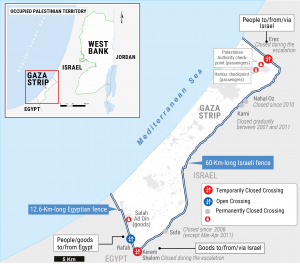
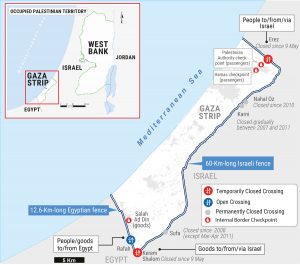
  • Throughout this period, the Israeli authorities closed the Erez and Kerem Shalom crossings, preventing the movement of people and goods from the West Bank or Israel and back. The closures affected humanitarian access, essential services, and the entry of vital items such as fuel. The Egyptian-controlled Rafah crossing and the adjacent internal Salah Ad Din gate, controlled by the local authorities, operated as usual, allowing the movement of goods and people between the Gaza Strip and Egypt.
  • The hostilities continued until a ceasefire came into effect at 22:00 on 13 May. The ceasefire continues to largely hold, despite incidents involving the exchange of fire, shortly after the ceasefire and on 14 May.
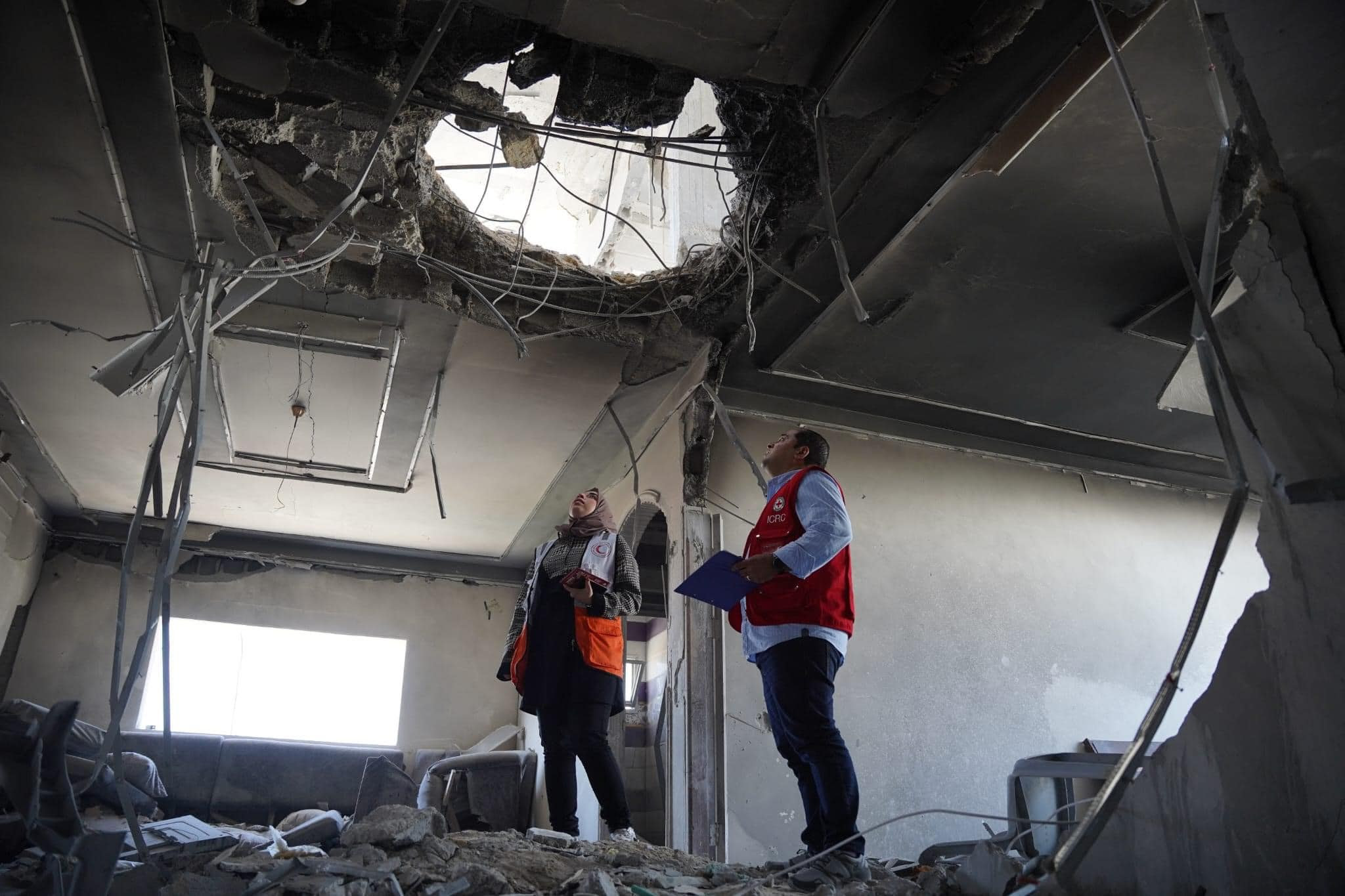
Initial assessment of damaged caused to a house during the escalation in Gaza. 13 May 2023. Credit Palestine Red Crescent Society

HUMANITARIAN OVERVIEW

  • The escalation of hostilities resulted in casualties, displacement and infrastructure damage (see key points above). In addition, there has been a humanitarian impact on education, livelihoods, access to services, shelter and water and sanitation.
  • The escalation and the associated closure of the Israeli-controlled crossings severely affected people’s access to essential services. For example, patients were unable to reach health facilities, including those who needed referral to hospitals in the West Bank, including East Jerusalem and schools were closed throughout the hostilities.
  • Mental health and psychosocial support (MHPSS), gender-based violence (GBV) and child protection services hotlines continued to operate during the escalations and noted a relative increase in incoming calls indicating increased levels of stress, fear, anxiety, insecurity, and panic attacks as well as domestic violence especially among women and children. Responses will need to correspond to the rise in case management, stress relief activities, MHPSS responses, GBV responses and legal aid.
  • The local authorities estimated losses related to the cessation of economic activity at US$40 million and infrastructure losses at about $1 million, including to 159 water lines and 173 sewage lines, 304 power lines and transformers, in addition to damage to roads.
  • The damage to housing units is estimated at $9 million.
  • The escalation exacerbated pre-existing shortages of urgent medical supplies needed for critical health services, including treatment for the wounded.
  • According to the MoH in Gaza, hundreds of patients and their companions were unable to reach vital medical care in the West Bank, including East Jerusalem, or in Israel.
  • The closure of Israeli crossings prevented the entry of vital items such as food. Since the beginning of the year, an average of 80 truckloads per day of food items had entered Gaza from or through Israel. Additionally, the closure prevented the dispatch of food supply by the World Food Programme (WFP), from Israel into Gaza.
  • During the closure, fodder supplies reached critically low levels.
  • Access to the sea for fishing was suspended for five consecutive days per safety directives from the local authorities, affecting more than 4,400 fishers and their families, who rely on fishing as their main source of income.
  • Farmers were unable to safely access farmlands near the Israeli perimeter fence for irrigation, harvesting, feeding livestock and other essential activities, critically undermining their livelihoods, and leading to scarcity of fresh vegetables and other food commodities in local markets.
  • The agricultural sector incurred losses estimated at $3 million, including 200 agricultural wells, 10,000 metres of irrigation lines, 600 dunums of crops (vegetables and fruits), and 150 dunums covered with greenhouses. Livestock farms, including poultry, cattle, and sheep, incurred losses estimated at $225,000, in addition to loss incurred due to the inability to transfer and export more than 1,100 tons of vegetables and fish.
  • The Gaza Power Plant, which depends on regular fuel deliveries through Kerem Shalom crossing, had to shut down one of its three operating turbines between 10 and 15 May. This reduced electricity provision to around 12 hours per day, on average, disrupting the already challenged provision of basic services, including water, sanitation and health care causing larger reliance on backup generators and reducing access to piped water.

Protection against Sexual Exploitation and Abuse

All humanitarian responses will prioritize a community-centered approach and will take appropriate measure towards the protection against sexual abuse and exploitation (PSEA). SAWA helpline 121 and WhatsApp number 00 972 59-4040121 (East Jerusalem 1-800-500-121) operate 24/7. These toll-free numbers are disseminated across all areas of intervention to report cases of sexual abuse and exploitation and facilitate emergency counselling and referrals of affected people to services. The PSEA Network is monitoring calls daily and will reinforce the number of counsellors if necessary.

FUNDING

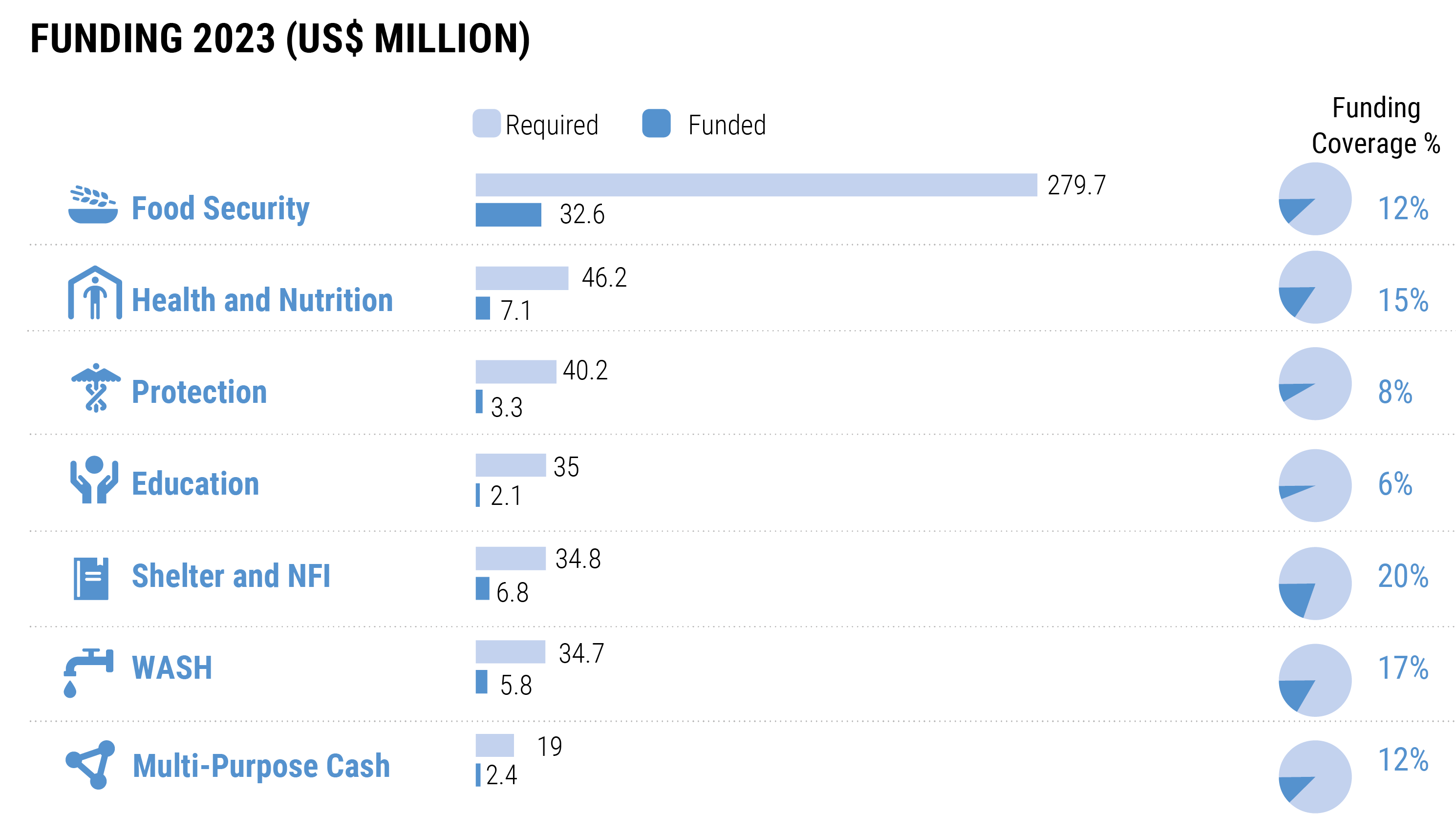
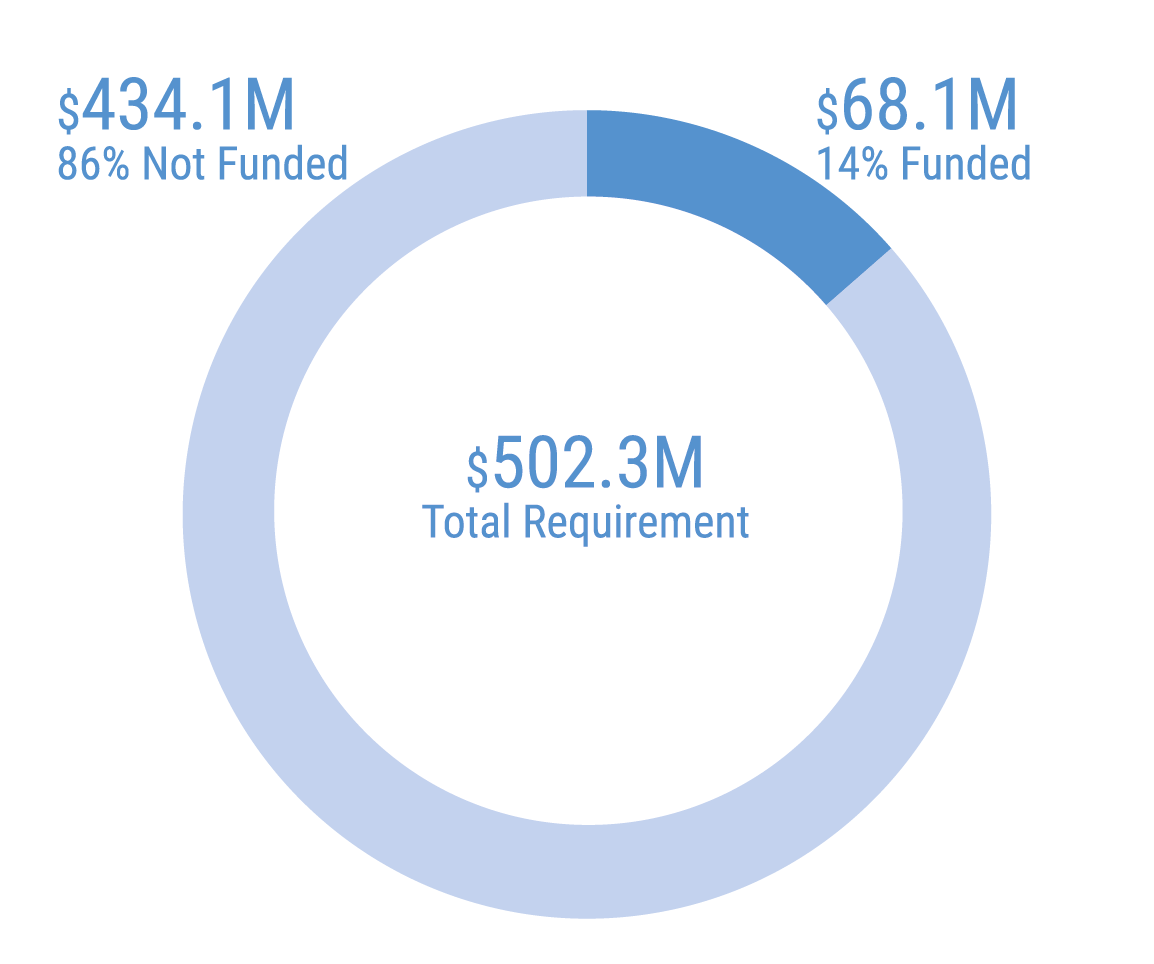
The escalation has highlighted the urgent need for humanitarian assistance in the occupied Palestinian territory (oPt). Of the total requirements of about $502 million outlined in the 2023 Humanitarian Response Plan, only 15 per cent has been funded in the first third of the year. Organizations such as UNRWA and WFP are facing critical funding shortfalls, resulting in decreased assistance to vulnerable Palestinians at a time of increasing need and heightened instability.

Cluster/Sector Required (US$) Funded (US$) Coverage (%)
Education $34,962,875 $2,054,849 5.88%
Food Security $279,745,504 $32,644,552 11.67%
Health $46,157,000 $7,129,533 15.45%
Multi-Cluster/Multi-Purpose Cash $18,996,729 $2,360,237 12.42%
Protection $40,167,245 $3,342,974 8.32%
Shelter and Non-Food Items $34,848,993 $6,800,000 19.51%
Water, Hygiene and Sanitation $34,716,169 $5,764,012 16.60%
 
Posted in Blockade | Comments Off on Humanitarian situation in Gaza Flash Update #5 as of 17:00, 15 May 2023

Back to “normal”

Another Israeli military assault on Gaza and again, as if stuck on repeat, the killing of civilians and damage to civilian infrastructure in the Strip is presented by Israeli officials as unavoidable collateral damage.

May 16, 2023

Photo: Mohammed Zaanoun. May 15, 2023

On Thursday, May 11, before a ceasefire was reached, Gisha, together with partner human rights organizations Al Mezan, Adalah, and Physicians for Human Rights Israel, sent an urgent letter to Israel’s Minister of Defense, Attorney General, and Coordinator of Government Activities in the Territories. We demanded that Israel stop the killing and targeting of civilians and civilian infrastructure and enable humanitarian access, immediately. “Security challenges, including risks posed during active hostilities, do not exempt Israel from its humanitarian obligations to residents of Gaza,” we emphasized in the letter, concluding that “the violation of these principles raises serious concern of flagrant violations of the rules of war that may amount to war crimes.”

On top of the killing and immense harm to civilians in Gaza, Israel’s five-day closure of Erez and Kerem Shalom crossings had immediate impact on its 2.2 million residents: Dozens of patients missed appointments for medical treatment, aid was obstructed, a struggling economy was dealt yet more losses, and electricity supply was impacted for lack of fuel. Hundreds of rockets were also fired from Gaza towards Israel, taking the lives of two people and causing damage to property. According to various reports, some rockets landed inside the Strip.

Sources: Shelter Cluster, OCHA, Gaza Ministry of Health
Photo by Majdi Fathi
After a ceasefire came into effect on Saturday night, life in Gaza returned to “normal,” or in other words, back to the routine of life under closure and occupation. Erez Crossing was reopened on Sunday, allowing the few Palestinians who meet Israel’s criteria for permits to exit and enter the Strip. Entry and exit of goods via Kerem Shalom has been restored, allowing in fuel, food and humanitarian supplies.

The full extent of the damage caused by Israel’s latest assault on Gaza is just beginning to surface, but we’ve seen this script before. Despite its far-reaching control over life in Gaza and repeated, deadly attacks on the Strip, Israel continues to evade all responsibility for Palestinians’ lives and human rights.

In between wars, when Gaza is no longer in the headlines, Israeli policies continuously harm Palestinians, who are left to pick up the pieces, cope with the horrors and the ongoing trauma, and mourn the lives lost. Only removing the closure, ending the occupation, and apartheid will get us off repeat.

Posted in War | Comments Off on Back to “normal”

Humanitarian situation in Gaza Flash Update #4

KEY POINTS

  • Hostilities between Israeli forces and Palestinian armed groups in Gaza continued for the fifth consecutive day, resulting in further casualties and damage to property, and further worsening the humanitarian situation.
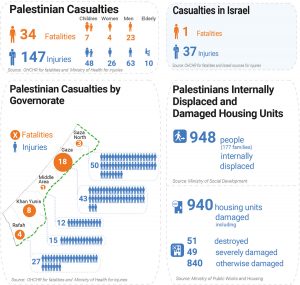
  • According to the UN human rights office (OHCHR), as of 17:00 on 13 May, the total number of Palestinian fatalities has risen to 34, including at least 13 civilians, six members of armed groups, and 15 people whose status is yet to be confirmed. Among the 13 civilians were four girls, three boys, four women and two men. According to the Ministry of Health (MoH) in Gaza, 147 Palestinians, including 48 children and 26 women, were injured between 9 May and 17:00 on 13 May.
  • Up to 17:00 on 13 May, the UN Human Rights Office (OHCHR) had verified one Israeli woman fatality. According to Magen David Adom and hospitals in Israel, at least 37 people have received medical treatment for physical injuries, alongside people treated for shock.
  • Damage to essential infrastructure has been reported across the Gaza strip. Over the night of 12 May, airstrikes near health facilities reportedly damaged Al Aqsa hospital in Deir al Balah and the Indonesian hospital in northern Gaza, in addition to two primary health care clinics in Khan Younis and northern Gaza. Separately, shrapnel fell inside two additional UNRWA schools, bringing to four the total number of UNRWA Schools where shrapnel has been discovered since the beginning of the current round of hostilities.
  • Internal displacement is increasing. As of 15.00 on 13 May, 177 Palestinian families, comprising 948 people, have been internally displaced, either because their homes have been damaged, or even destroyed, or due to safety concerns. Out of the internally displaced persons, 43 people are staying in an UNRWA school in Beit Lahiya. According to the Ministry of Public Works and Housing in Gaza, 940 housing units have been damaged, including 51 that were destroyed, 49 that were severely damaged and rendered uninhabitable, and others that sustained less severe damage.
  • For the fifth consecutive day, both Israeli-controlled crossings, Erez (for people) and Kerem Shalom (for goods), were closed. According to the MoH in Gaza, hundreds of patients and their companions are unable to reach essential medical care in the West Bank, including East Jerusalem, or in Israel; among them are cancer patients and others with chronic conditions.
  • The closure of Kerem Shalom crossing has prevented the entry of vital items such as food, medical supplies and fuel, at a volume of over 300 truckloads per day. The Gaza Power Plant, which depends on regular fuel deliveries through Kerem Shalom crossing, is due to run out of fuel on Monday, after one of the three operating turbines was shut down on 10 May. This has affected the provision of basic services including water, sanitation and health. Food supply trucks of the World Food Programme are ready and on standby but could not be dispatched from Israel into Gaza. Fodder supplies are expected to run out in a week should no replenishment be made.
  • Fishing at sea has been prohibited by the local authorities for five consecutive days, affecting more than 4,400 fishermen and their families, who rely on fishing as their main source of income. Farmers are unable to safely access farmlands near the Israeli perimeter fence for irrigation, harvesting, feeding livestock and other essential activities, critically undermining their livelihoods and leading to scarcity of fresh vegetables and other food commodities in local markets.
  • The ongoing exchange of fire has taken a severe toll on the mental health of people, particularly children, who are living in a constant state of fear and panic.
  • Referring to the deteriorating humanitarian situation in Gaza, the executive director of UNICEF has stated that she “deplores all acts of violence against children and calls for the immediate cessation of hostilities and for all parties to protect children from all forms of violence and grave violations, in accordance with international law, including international humanitarian law.”
  • Additional casualties were reported after this reporting period and will be covered in the next report.

Posted in War | Comments Off on Humanitarian situation in Gaza Flash Update #4

Day 5: Israel continues to commit acts of ‘domicide’ against Palestinian homes in Gaza, displacing hundreds of civilians

Date: 13 May 2023

Ref: 38/2023 

Day 5: Israel continues to commit acts of ‘domicide’ against Palestinian homes in Gaza, displacing hundreds of civilians 

For the fifth consecutive day, Israeli forces continued their military offensive on the Gaza Strip, escalating attacks on houses using highly destructive missiles. The use of force caused substantial damage beyond intended targets, to dozens of houses and civilian objects, including hospitals and medical facilities.

Al Mezan’s documentation shows that since 9 May 2023, 33 Palestinians were killed, including six children and four women, and 147 others were injured, including 48 children and 26 women. In addition, 57 residential units housing 58 families of 374 people, including 133 children and 53 women, were entirely destroyed. Three hundred more residential units were also partially damaged. Hundreds of people were displaced amid relentless airstrikes.[1]

In parallel, Israel’s complete closure of Gaza crossings for the fifth consecutive day continues to threaten the supply of essential basic services and foreshadows a major humanitarian crisis.  The Union of Gaza Municipalities has warned that an environmental and health catastrophe is looming as, due to lack of fuel, treatment plants have stopped treating sewage and about 120,000 cups a day are being pumped into the sea. Some 200 drinking water wells are also in danger of no longer being able to supply water to residents. In addition, Gaza’s only power plant is about to be completely shut down in the coming days.

Below are the main Israeli attacks against the Gaza Strip that took place on the evening of 12 May and up to 1 p.m. on 13 May, based on Al Mezan’s initial documentation:

–                      At approximately 2:15 p.m. on Friday, 12 May 2023, Israeli warplanes launched a missile at the house of Ahmed Ayesh al-Hashash, 41, where a family of seven members lived—including five children. The asbestos-roofed house is located on a 100 m2 plot near Al-Birr and Al-Taqwa mosque in the Msabbeh neighborhood, northwest of Rafah City. Ahmed’s father, Ayesh Salama al-Hashash, 71, was injured in the attack. Medical sources at Abu Youssef al-Najjar Hospital described his injury as moderate. The attack completely destroyed the house and two neighboring houses, one of which was owned by Mohammed Ayesh al-Hashash and housed a family of nine members, including five children. The other home housed the families of two brothers: Kamel Mezyed al-Hashash and his family of eight members, including five children, and his brother Abdelmalek, and his family of five members, including three children. Partial damage was also caused to some nearby houses.

–                      Simultaneously, Israeli warplanes launched two missiles at the house of Samir Mohammed Taha, 62, in al-Zawawi Street, east of Abbas al-Kilani gas station in Beit Lahiya (North Gaza District). Two families of eight members lived in the two-story house, including four children and two women. The attack completely destroyed the house and caused considerable property damage to some neighboring houses. Israeli forces called one of the neighbors to inform him of their intention to strike the house.

–                      At approximately 3:55 p.m. the same day, Israeli warplanes launched two missiles at the three-story house of Kamal Ahmed Abu Tair, 61, in the village of Abasan Al-Kabira, east of Khan Younis City, and completely destroyed it. Four families of 18 people, including seven children and four women, lived in the house. The attack caused partial damage to some neighboring houses. Israeli forces called one of the neighbors to inform him about their intention to strike the house.

–                      At approximately 4:20 p.m. the same day, Israeli warplanes launched two missiles at the three-story house of Hussein Mohammed Marouf, 58, in Beit Lahiya (North Gaza District). Three families of 15 people, including nine children and three women, lived in the house. The attack completely destroyed the house and caused considerable property damage to some neighboring houses. Israeli forces called the owner of the house to inform him about their intention to strike it.

–                      Simultaneously, Israeli warplanes launched a missile at an apartment on the fifth floor of the Banyas building, which consists of six floors, in al-Nassr neighborhood, in the west of Gaza City, killing the Islamic Jihad leader Iyad al-Hasani, 51, and Mohammed Walid Abdelal, 33, and injuring others, including two children. The attack caused property damage to some of the neighboring apartments.

–                      At approximately 8:30 p.m. the same day, Israeli warplanes launched two missiles at the five story-house of Mohammed Ali Yassin, 60, in Kishko Street, east of al-Zaytoun neighborhood, eastern Gaza City. Five families of 24 people, including ten children and three women, lived in the house. The attack completely destroyed the house and caused property damage to some neighboring houses. Israeli forces called one of the neighbors to inform him of their intention to strike it.

–                      At approximately 8:35 p.m. the same day, Israeli warplanes launched two missiles at the two-story house of Yehya Kamel Abu Obeid, 46, in central Deir al-Balah City (Middle Area District). Two families of 11 members, including six women and two children, lived in the house. The attack completely destroyed the house and caused partial damage to some neighboring houses, the Ambulance and Emergency Department of the Ministry of Health, and some departments and buildings of al-Aqsa Hospital, which is only 120 meters far from the targeted house. Two of the hospital workers were injured: Khalil al-Daqran, 57, a Nursing Supervisor, and Hani Abu Sweireh, 47, Electrical Technician in the Hospital’s Maintenance Department, as well as an in-patient child. In addition, six injuries arrived at the hospital due to the attack, including two children and four women. Medical sources described all injuries as minor.

According to the General Director of al-Aqsa Hospital, partial damage was caused to various hospital departments, including the Intensive Care Unit. Medical patients and their companions, predominantly children and women, were terrified. Medical staff merged departments try to mitigate the risk of harm to patients. Al Mezan notes that Al-Aqsa Hospital is the only hospital in the Middle Area District, serving around 350,000 people. It has 22 departments and 191 beds. Around 250 patients visit the hospital’s external clinics every day. Furthermore, the Emergency Department receives between 600-700 cases every day.

–                      At approximately 1:30 a.m. on Saturday, 13 May 2023, Israeli warplanes launched four missiles at the three-story house of Salim Hassan Abu al-Ata, 60, in al-Tawahin Street, east of al-Shujaeya neighborhood, east of Gaza City. Two families of 20 people, including 13 children and two women, lived in the house. The attack caused considerable damage to the second and third floors and caused property damage in neighboring houses. Israeli forces called the owner of the house to inform him of their intention to strike it.

–                      At approximately 3:00 a.m. the same day, Israeli warplanes launched one missile at the five-story house of Hazem Adel Muhanna, 60, in the vicinity of al-Yarmouk Mosque (North Gaza District). Five families of 19 people, including five children and eight women, lived in the house. The attack totally destroyed the house and caused considerable damage to neighboring houses. Israeli forces called one of the house’s residents to inform him of their intention to strike the house.

–                      At approximately 10:05 a.m. the same day, Israeli warplanes launched two missiles at the three-story house of Faraj Fathi Banat, 39, in the vicinity of Beit Lahiya roundabout (North Gaza District). Three families of 22 people, including 12 children and four women, lived in the house. The attack led to the injury of two women with minor injuries and completely destroyed the house. Property damage was caused to neighboring houses and to the al-Shikh Saad mosque. Israeli forces called one of the house’s residents to inform him about their intention to strike the house.

–          At approximately 11:45 a.m. the same day, Israeli warplanes launched two missiles at the three-story house of the sons of Khader Radwan al-Zanin, in Beit Hanoun (North Gaza District). Six families of 46 people, including 30 children and six women, lived in the house. The attack totally destroyed the house and caused property damage to neighboring houses. Israeli forces called one of the house’s residents to inform him about their intention to strike the house.

Al Mezan asserts that Israel’s warning to residents of impeding attacks does not exempt it from complying with international norms regulating the conduct of hostilities. The direct targeting of civilian objects such us residential houses is strictly prohibited under international humanitarian law. Intentionally directing attacks against civilian objects amounts to a war crime under Article 8(2)(b)(ii) of the Rome Statute of the International Criminal Court. The extensive destruction of property, not justified by military necessity and carried out unlawfully and wantonly also amounts to a grave breach of the Fourth Geneva Convention.

Al Mezan also notes that Israeli attacks appeared to violate rules concerning the prohibition of certain means and methods of warfare, as Israeli forces deliberately employed missiles with destructive power that surpassed that necessary to strike intended target, causing damage to dozens of surrounding houses, facilities, and other civilian property. In just a few seconds, Palestinian homes have been turned to rubble. Along with homes, the life savings of entire families and their memories are also destroyed, therefore causing social and psychological trauma.

According to the United Nations Special Rapporteur on the right to adequate housing, “[t]he massive, arbitrary destruction of civilian housing in violent conflict should be recognised as a standing crime under international law”. The Special Rapporteur employs the term ‘domicide’ to refer to the massive, arbitrary destruction of civilian houses and the ensuing violation of the human right to adequate housing. Back in February 2023, UN Experts hold that “[t]he systematic demolition of Palestinian homes, erection of illegal Israeli settlements and systematic denial of building permits for Palestinians in the occupied West Bank amounts to ‘domicide’”.

Al Mezan stresses that gross violations of the right to adequate housing must be investigated and prosecuted like any crime against humanity currently recognized under international law. Such severe violations of economic, social and cultural rights need to receive due attention by international accountability mechanisms, including the International Criminal Court

Posted in War | Comments Off on Day 5: Israel continues to commit acts of ‘domicide’ against Palestinian homes in Gaza, displacing hundreds of civilians

Israeli Occupation Forces Continue Smear Campaign against PCHR and its Work

The Palestinian Centre for Human Rights (PCHR) has extremely disgruntled the Coordinator of Government Activities in the Territories (COGAT)’s post on its official account and the Israeli Occupation Forces (IOF) Spokesperson’s statements using incomplete and selective citations from a press release issued by PCHR last Thursday, 11 May 2023, as part of latter’s follow-up of the latest developments during IOF’s ongoing aggression on the Gaza Strip for the fifth consecutive day.

In light of this distortion of its work and purposeful manipulation of context, PCHR would like to clarify the following:

First: This is not the first time that IOF selectively misuse PCHR’s publications, as it is part of an incitement campaign against PCHR that has been ongoing over years by Israel and its right-wing organizations to defame the Centre and undermine its professional work within a systematic campaign to delegitimize and directly target human rights organizations.

Second: It is paradoxical how IOF misuse and employ PCHR’s publications to grieve Gaza children while they continue their intense campaign against PCHR, accusing it of “Terrorism” and calling its staff as “Terrorists in Suits” with alleged ties to “Terrorist Organizations” and waving a “Legal War”. All of this is within Israel’s war efforts against the Palestinian people while IOF continue bombing and directly and deliberately targeting Palestinian civilians, including children and women, round the clock in disregard for the principles of distinction, proportionality, and military necessity that amounts to war crimes and crimes against humanity according to the rules of the international law. 

Third: citing PCHR with regard to several cases it has documented: PCHR has explicitly mentioned in its press release that investigations in these cases are still ongoing and not final. In this regard, PCHR recalls the crime that occurred in Jabalia cemetery during 2021 Israeli aggression when a group of children were bombed and killed and IOF disclaimed responsibility for this crime. At the time, PCHR conducted thorough investigations in cooperation with the competent Palestinian authorities and the final investigations revealed that IOF bear full responsibility for that crime. 

Fourth: PCHR emphasizes its professional and independent mission and high credibility at the local and international levels, as it builds legal files on all crimes committed by IOF to be used before the International Criminal Court and other legal work on behalf of the Palestinian civilian victims, and to achieve accountability and prosecution of the Israeli leaders.

Fifth: PCHR affirms the right of the Palestinian people to resist the occupation by all available means, including armed struggle, all the way to achieve their legitimate rights, end the occupation, and establish their independent state.

Posted in War | Comments Off on Israeli Occupation Forces Continue Smear Campaign against PCHR and its Work