Friday 12/5/2023
6:00 pm Update
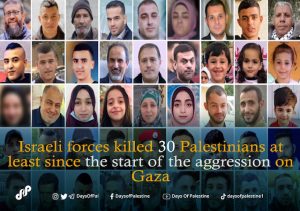
🚨33 citizens killed including 6 children and 3 women , and 111 injured since the begining of the Israeli airstrikes against Gaza Strip that started on Tuseday 9th
Friday 12/5/2023
6:00 pm Update
🚨33 citizens killed including 6 children and 3 women , and 111 injured since the begining of the Israeli airstrikes against Gaza Strip that started on Tuseday 9th
Israeli forces continued their assault on the Gaza Strip for the fourth consecutive day, targeting civilians and civilian objects. Al Mezan’s documentation shows that so far, 31 Palestinian were killed, including six children and four women, and another 106 were injured. In addition, 13 houses were completely destroyed, and hundreds of others were damaged.
In parallel to the ongoing assault and to its 16-year-old closure and blockade, since Tuesday, 9 May, Israel also further tightened its unlawful closure measures on Gaza by closing Erez and Kerem Shalom crossings. As Kerem Shalom remains closed, basic necessities—including fuel— have not entered Gaza for four days in a row. As a result, Gaza’s only power plant, which runs on fuel imported from Israel, has been forced to reduce operations. The number of operating generators has already been reduced. A number of elements indicate that Gaza is about to run out of fuel and that if the plant is not supplied with the necessary fuel, it will shut down in the next few hours.
According to the information collected by Al Mezan, at the time of writing, there are only 166 megawatts of electricity available in Gaza—120 MW of which are supplied from Israeli lines and 46 MW from the power plant. The actual need for electricity to meet more than two Palestinians living in Gaza during the current spring weather is 450 MW per day. This means there is a 63 percent deficit. The ongoing Israeli offensive has disrupted electricity distribution schedules to people’s homes, with Gaza residents currently receiving eight hours of electricity followed by eight hours of power cuts.
Since the beginning of the Israeli offensive on 9 May 2023, the Gaza Electricity Distribution Company (GEDC) has received 453 warnings of malfunctions in power networks damaged by Israeli attacks.
The lack of power foreshadows a significant deterioration of humanitarian conditions in Gaza, particularly with regard to health and the environment, and threatens to hinder the work of hospitals, medical clinics, water wells, water desalination plants and other service facilities, as well as the operation of pumps and sewage treatment plants, prompting municipalities to discharge sewage into the sea without treatment.
Al Mezan strongly condemns Israel’s ongoing attacks on civilians, residential areas and civilian infrastructure, as well as the total closure of the Gaza crossings and the ban on the entry of fuel needed to operate Gaza’s power plant. Al Mezan asserts that these practices are flagrant violations of international humanitarian law, which prohibits the occupying power from punishing the civilian population.
Al Mezan calls on the international community to promptly intervene and put pressure on Israel to immediately stop its military attack on the Gaza Strip, lift the illegal closure and blockade, provide protection for Palestinian civilians, stop the policy of collective punishment, and immediately re-open the crossings to allow the entry of fuel to the Power Plant
Terms like ‘collateral damage’ and ‘proportionality’ belie the civilians whose lives were taken in the latest pointless cycle of pain and suffering. When the logic behind the attacks is so incomprehensible, words fail
Amira Hass
May 11, 2023
For this 87-year-old woman lying sick in her home in Khan Younis, the past 75 years shrank into a single moment dating back to April or May 1948. It was then that she and her family fled their home in Jaffa after it was bombed by the pre-state militant Etzel and Haganah forces. They thought they’d be home after two or three days – a week or two at most. On Tuesday, she surprised her family by waking up from a two-day coma. Her children understood through her mumbling that upon waking, she believed herself to be her 12-year-old self again, a girl whose world had been turned upside down in a matter of hours.
“It has nothing to do with the recent bombings. I don’t think she knows there’s a new war,” her granddaughter told me. “It’s common. Even when our elders lose their memory, they remember themselves during the Nakba. So I thought to myself that maybe when I’m old with Alzheimer’s, I won’t remember anything other than that terrible war in 2008, when I was 12 years old.”
We have here everything we need to make a factual remark on the ongoing Nakba. Not a confrontational, argumentative or narrative remark, but a simple fact: The Nakba, a disaster of dispossession and expulsion, hasn’t let up for a moment since we turned the Palestinian people into a nation of refugees. And they – how irritating – refuse to adapt or surrender to this reality. This is the necessary starting point to understanding the political, military and social facets of the Israeli-Palestinian situation.
A Hamas operative who isn’t a member of the organization’s military wing once proudly told me, “During the first intifada, we threw stones – but now, we have rockets.” For our part, we Israelis had the homemade Davidka mortar, and today we have the kind of bombs and military aircraft that the military censor would bar us from naming. Each side boasts the development and efficiency of its weapons, but Palestinian organizations live in constant denial as the gap between their arsenal and Israel’s continues to widen.
“I was getting ready to sleep. Suddenly I felt the shockwaves. Like an earthquake. Only then did the sound follow,” said the granddaughter, who I’ve known since she was a child, of Tuesday morning’s bombings. “I thought that, as always, the Jews are bombing open areas, empty bases of the Jihad or Hamas.” She used a term hurtful to me which is commonly used by Palestinians, feeling no need to replace “the Jews” with “the army” for my sake.
“In previous cases our resistance organizations shot at Israel and knew that no Israeli would be killed,” she continued. “The army shelled and knew that no Palestinians would be killed,” she said. “Each one would respond to the other, and we could go back to normal.”
That is why the shock was so great this time. “Only fifteen minutes after the bombing we began to hear reports of women and children being killed. My friend and her family live in the same building as the family of the Islamic Jihad commander Tareq Izzeldeen. They were in the apartment when the house was bombed, but luckily they weren’t hurt. Their whole apartment, though, is ruined. It’s completely destroyed. My friend left the apartment and saw dead bodies on the stairs.”
Her words provide a reminder of the unimaginable resilience of the Palestinians. “[We are] reluctant heroes”, my friends in Gaza told me in 2008, 2012, 2014, 2021 and on many occasions in between, during military invasions and attacks that didn’t receive the title “war.” Yet with every war this “reluctant heroism” becomes more difficult.
I was talking with this young friend of mine early in the afternoon on Wednesday, when the rocket launchers of the Islamic Jihad were still silent and the missile alarms had not yet interrupted the Israeli radio broadcasts. “Everyone is expecting the Jihad to react,” she said. “The sight of the children that Israel murdered shocked everyone.”
I asked her, as if she were an expert on the Islamic Jihad or a military strategist, why she thinks they aren’t responding. “Holding the Israelis in fear is also a weapon,” she explained. “The problem is that we’re also afraid. Waiting is sometimes more difficult than the actual moment of the bombing. I also think that the Islamic Jihad must respond. But I don’t long for another war.”
This is first-hand testimony of the internal contradictions in everyone’s hearts. I didn’t notice if she said that Hamas should also respond. As a ruling party, it has different considerations than those of the smaller military organization. Hamas doesn’t like the comparison, but they went through similar stages that their rival, the Fatah movement, had passed during the second intifada. Hamas also feels the contradiction and tension between a liberation movement and a ruling government with officials and a responsibility to pay salaries and maintain schools.
Another friend of the young woman I was talking to survived cancer, making it through after many treatments and an unwavering love for life. An appointment was scheduled for her on Wednesday, at a hospital in Jerusalem. It was coordinated after much effort, and after the costs of the treatment were guaranteed to be covered by the Palestinian Authority. But the points of entry into Israel were closed. “How many other patients who had to travel for a life-saving treatment didn’t get to do so?” my friend wondered.
Israel’s Attorney General Gali Baharav-Miara, who approved the killing of the senior Islamic Jihad and their families, must have thought about such terms as “collateral damage” and “proportionality.” But this collateral and proportional damage is the civilians whose lives were taken, and the many more cycles of pain and suffering. All those injured and traumatized for life; all those who’ll need treatments for stress and anxiety and for diabetes that might develop because of their worry and fear; all those who’ll suffer from depression, apathy, a loss of school days and even months with no education; all the medical treatments that were postponed or canceled. And all this without mentioning the vast material devastation.
Writing is a human act combining logic and learning, experience and creativity to convey a clear and enlightening message. But it’s hard to summon creativity time and again to describe the destruction. It’s a struggle to repeatedly describe the logic behind each round of shelling, bombing, shooting and killing.
Whether this logic is driven by momentary political and organizational considerations, long-term military plans or national and patriotic considerations, when logic is so illogical, words fail.
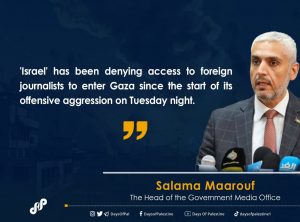
The Palestinian Health Ministry condemned on Wednesday, May 10, 2023, the Israeli occupation closure of the Beit Hanon (Erez) crossing for the second day in a row, preventing Palestinian patients from leaving the city to receive medical.
“The Israeli occupation continues to close the Beit Hanon crossing for the second day in a row, preventing 292 Palestinian patients, most of whom are oncology patients, and their companions from leaving for treatment in hospitals in Occupied Jerusalem, the West Bank, and the 1948-occupied Palestinian territories,” said the ministry.
It indicated that the Israeli occupation banning Palestinian patients from reaching specialized hospitals is a clear violation of International humanitarian law and the Fourth Geneva Convention.
The Israeli occupation is not satisfied with preventing the entry of medical diagnostic devices and some needed medicine to Gaza for more than 18 months but is still completing its crimes against Gaza’s Palestinian patients for the third day, it added.
The Palestinian Health Ministry called on the international community to interfere and pressure the Israeli occupation to allow Palestinian patients to leave Gaza for medical treatment to save their lives.
the undersigned, international health professionals concerned in the protection of Palestinian health rights and in the respect of human rights and the application of international laws, ask your Excellency to act immediately for relieving the plight of Gaza again sealed and without medical supplies, or permit for patients to exit for care, by requesting free and immediate passage of medical supplies, instruments and international health and healthrelated professionals into Gaza and to secure exit/return permits for patients.
We know that EU representatives in Palestine and yourself are aware of the scarcity in medical supplies and personnel, which mark the worst stage of 17 years of blockade of Gaza.
We therefore assume you can see the implications for the whole population of another military attack, where the capability to care for eventual trauma patients is simply not available, as it is no more that of maintaining routine care.
We ask you to request strongly to Israel and Egypt to keep open in all conditions the passages and grant unrestricted access, as above, for humanitarian purposes.
In doing so, you and the EU would be honoring your own statements of concern for the Palestinian population and would exercise the institutional duties of EU as signatory of the Geneva conventions.
We expect you will be so kind to give course to this request rapidly.
Best regards
1. Alan Meyers, MD,MPH, Emeritus Professor of Pediatrics, Boston University School
of Medicine, Boston MA USA
2. Alice Rothchild MD, USA
3. Amy Alpert CCC-SLP, USA
4. Andrea Balduzzi, Dr. Biologist, retired University of Genoa, Italy
5. Angelo Stefanini, Dr., PCRF and University of Bologna (
6. Baroness Jenny Tonge, Dr. UK
7. Carla Ciccone, Gynecologist, retired, Ospedale Moscato, Avellino, Italy
8. Cathy Wield, Specialist in Emergency Medicine
9. Christophe Oberlin, Professor of Medicine, France
10. Colin Green, PhD (Med); DSc(Med); FRCVS; FRC Path; FRCS (England) Professor
of Surgery, University College London (UCL),, Founder, Director of Overseas
Development, IMET2000
11. David Ward, MB, Child and Adolescent Psychiatry Consultant Psychiatrist, Senior
Lecturer- University of Queensland, Metro South Health
12. Derek Summerfield, King’s College, Univ of London
13. Dianne Lefevre, Consultant psychiatrist, London, UK
14. Jean-Jacques AMY,, Emeritus professor of obstetrics and gynaecology, Vrije
Universiteit Brussel, Belgium
15. Eric David, Professeur émérite de droit international public, l’Université libre de
Bruxelles, Past President of the Centre for International Law (ULB),, Bruxelles,
Belgium
16. Eric Windgassen, MRC.Psych, Consultant Psychiatrist (retired), UK
17. Fanny Polet, Viva la Salud, Director, Belgium
18. Franco Camandona, MD, Gynecologist, Ospedale Galliera, Genoa, Italy
19. Gianni Tiognoni, MD, Fondazione Lelio e Lisle Basso, Italy
20. Herman Deley, Ghent University, Belgium
21. Jan Gerris, MD, PhD, Ghent University, Belgium
22. Jane Gilbert M.A (Psychol), M.Sc (Clin Psych), C Psychol, AFBPsS, Consultant
Clinical Psychologist, UK
23. Jon Jureidini PhD, Prof. MBBS FRANZCP, Research Leader, Critical and Ethical
Mental Health (CEMH), The University of Adelaide, Australia
24. Leon Verbruggen, MD, PhD, retired professor of rheumatology, Vrije Universiteit
Brussel, Belgium.
25. Marina Rui, PHD, University of Genoa, Italy
26. Maxine Fookson, RN, MN, Portland, Oregon
27. Nozomi Takahashi. PhD, Inflammation Research Center, VIB-Ghent University,
Belgium
28. Paola Manduca, Prof. Genetics, retired University of Genoa, Italy
29. Peadar O’Grady, ,MB, MPhil, MRCPsych, Consultant Child Psychiatrist, Dublin,
Ireland
30. Prem Jeyapaul, Consultant Psychiatrist, UK
31. Rachel Rubin, MD, MPH, Senior Medical Officer, Cook County Department of Public
Health, Forest Park, IL 60130, United States
32. Raija-Leena Punamäki Psychologist, Professor emerita, PhD., MEcon.Tampere
University, Finland
33. Ruchama Marton, MD, PHR, Israel
34. Sebastião Viola, MRCPsych,Consultant Psychiatrist, Cardiff, UK
35. Swee Ang, MD, Consultant Orthopaedic Surgeon, UK
36. Tom Gibelthorpe Consultant Psychiatrist, Sheffield, UK
37. Tomasz Pierscionek, Psychiatrist, NHS, UK
38. Vincenzo Stefano Luisi, Pediatric Cardiac Surgeon, Pisa, Italy
39. Vittorio Agnoletto, MD, Università degli Studi, Milano
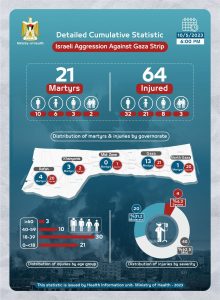
The air hung heavy as an overwhelming sense of dread permeated my bedroom and a feeling of unease crawled over my skin. At around 2 am (23.00 GMT) on Tuesday, 9 May, the violent shaking from the bombing outside woke me up.
I checked my phone and my worst fears were confirmed when I saw the news that the Israeli military was once again attacking Gaza. My area in particular was in grave danger of becoming the next target of Israeli warplanes.
As a journalist myself, I took to Twitter to let the world know what was happening.
Israel’s fighter jets returned, performing their lethal dance above our heads. Over the past 16 years, the sound of jets hovering above, drones buzzing, and bombs exploding over buildings have served as a constant reminder of how precarious life is in Gaza.
After hearing reports of the targeted killing of several Palestinian Islamic Jihad (PIJ) commanders in Gaza, many people began to fear that another war was imminent.
Yesterday’s horrifying statistics are an indication of the escalating violence. According to the Palestinian Ministry of Health, Israeli air strikes in the early morning hours claimed the lives of 15 Palestinians, including four women and four children.
Among the casualties was a prominent dentist, Dr Jamal Khaswan, who served as chairman of the board of Al-Wafaa Hospital, his wife Mervat, and their 20-year-old son Youssef, a medical student.
The family was killed when the ceiling of their home collapsed as they slept. As reported by Reuters, Dr Khaswan was “known for offering free treatment to poor families”.
The tragedy of killing people dedicated to healing and compassion further underscores the senseless nature of Israel’s violence.
At least 20 others were wounded in the recent attack, with many in critical condition. These numbers are expected to rise as the air strikes persist and rescue teams continue to search through the rubble.
I thought about the previous wars in 2008-2009; 2012; 2014; 2021; and 2022 and the memories of innocent lives lost, including children and women.
I’ve always known that the uncertainty of life in Gaza is a heavy burden for a parent, and the fear of losing a child at any moment is a constant nightmare. But it was after my daughter Sarah was born nearly a year ago that what I knew in the abstract became ever more real.
As a parent, facing these wars and dealing with their aftermath can feel debilitating. When I look into my child’s eyes, I can’t help but feel the weight of our situation, wondering what her future will hold or if she will even have one; if her hopes and dreams will be replaced with fear and loss, grief and trauma.
Tension hangs heavy in the night air as the sounds of explosions reverberate throughout the area. All over Gaza, parents are huddled tightly together with their children, doing their best to protect them and assure them they will be okay despite knowing in their hearts that there is no guarantee.
With each new attack, the spectre of death draws closer, casting a pall over our lives and the dreams we hold dear for our children.
The recently published heartbreaking scenes and images of innocent children killed in their sleep are a stark reminder of the fragility of life in Gaza. My heart aches for the children whose laughter has been silenced forever – children like Mayar Ezz el-Din, 11, her brother, Ali, eight, and Hajar al-Bahtini, five.
Family members of Mayar and Ali shared on social media that, a few hours before the children’s deaths, they had spent hours on Monday evening choosing the perfect outfits for their school trip the next morning and chattering endlessly about the adventures that await them and their friends.
They went to bed early after planning every detail for their field trip – a special day that includes visits to historical sites in Gaza, the zoo, and dining at a restaurant – which children look forward to all year. For Mayar, Ali, and their surviving classmates, this day never came.
Their friends, whose parents hesitated to tell them why their school trip was cancelled, are now left to grapple with this unbearable loss. The mother of Tuqa, a close friend of Mayar, shared on Facebook the devastation her daughter felt at the news, describing her “heartbreak” as a “pain she will never overcome”.
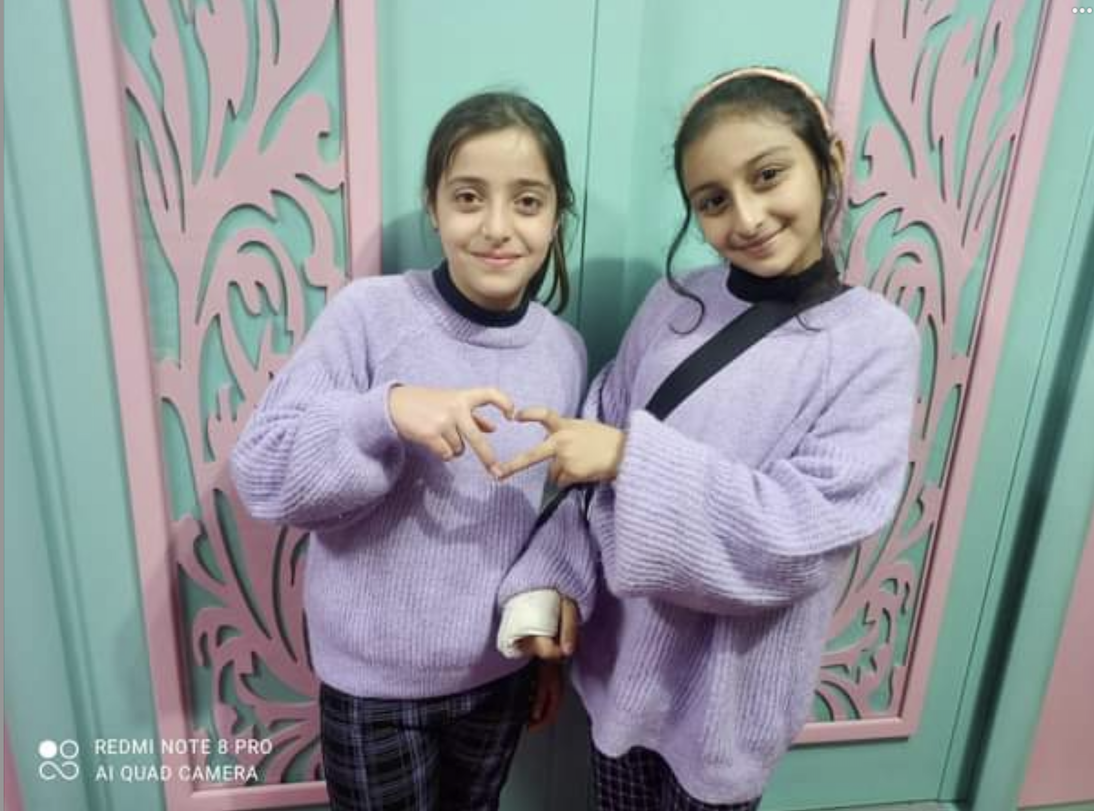
As I experienced myself over the course of several wars on Gaza, the children must now find solace in the memories of their friends – Mayar’s infectious laughter and the way her eyes sparkled with curiosity and mischief. As they walk through the now-empty hallways, they will feel the haunting absence of their friend’s smile and the warmth she brought to their lives.
The school trip the siblings were looking forward to will forever be a cruel reminder of dreams unfulfilled. Mayar and Ali’s expressions of joy, memorialised in the photos circulating online, signify a beacon of light in the dark shadows of war. Such images are not only now etched in the hearts of their teachers and friends, but all who value Palestinian life.
The reality of parenthood in a war-torn place like Gaza means a constant struggle between hope and despair. Yet, death, to us, feels easier than imagining that your child could be next.
Every day, we are confronted with the grim proof of our fractured existence: the bombed-out buildings, the makeshift hospitals, and the shattered lives of our friends and neighbours.
In the quiet moments between the chaos, I watch my infant sleep, her chest rising and falling with each gentle breath. I marvel at her innocence and her capacity for joy and wonder in a world that has shown the children of Palestine so little kindness.
As I look into my child’s eyes, I see a flicker of the dreams she carries within her: dreams of a life free from the constant threat of violence, of a world where she can grow and thrive without fear.
These tragedies pierce my heart like a dagger, and the pain never really goes away. I can’t help but put myself in the shoes of parents forced to bury their children, whose hopes, dreams, and laughter were snuffed out by the inhumane mechanisms of war.
Feeling this causes me a great deal of emotional distress, often oscillating between anger, sadness, and a profound feeling of helplessness.
For a refugee like me, whose grandfathers were among those who escaped death in the destroyed town of Barbara (now a part of Ashkelon), the continued bombings are a sobering reminder that the Nakba is not over.
As we mark 75 years of the Nakba this month, we recognise that the catastrophe of losing our homeland in 1948 continues to shape our lives and our ongoing fight for justice.
But even in the face of overwhelming adversity, when the weight of our circumstances threatens to crush us beneath its oppressive force, we will teach our children the importance of love, compassion, and resilience, and instill in them the values that will help them not only survive but also thrive.
As a father, a Gazan, and a human being, I refuse to let the darkness of Israel’s aggression extinguish the light of hope that burns within me. I will continue to dream, hope, and work towards a better future for my child and for all the children of Gaza.
And though the path ahead may be fraught with danger and uncertainty, I will walk it with my head held high, my heart filled with love, and my eyes fixed firmly on the horizon, where the promise of a new dawn awaits us – or at least, awaits our children.
That’s what every parent would say.
The views expressed in this article belong to the author and do not necessarily reflect the editorial policy of Middle East Eye.
Twelve-year-old Areej Asaliyeh dreamed of becoming a poet.
This was before shrapnel from an Israeli missile struck her home in Jabaliya refugee camp during Israel’s assault on Gaza in August 2022, causing her to lose her eyesight.
“I was playing with my uncle when it happened,” Areej told The Electronic Intifada.
Before Israel’s last assault, she said, “I wasn’t afraid of war, I wasn’t bothered by the sound of missiles. I never thought a missile would hit us and I would lose my eye.”
The injury left Areej feeling fearful of even going to school.
“Before my injury, I loved playing, drawing and studying, but now I stay in bed all day and do nothing,” Areej told The Electronic Intifada.
“I used to love writing poetry. I can’t write now because I’ve lost an eye.”
Ayoub Asaliyeh, Areej’s father, said the family felt safe in the area and did not expect an Israeli missile to strike. Since his daughter’s injury, his family’s entire life has been turned upside down.
“Areej is the center of all our concerns – her treatment, her sleep, her life. There is never a moment when Areej is not present in our lives,” he said.
Seventeen Palestinian children were killed during Israel’s surprise attack on Gaza for three days in August 2022.
Israeli strikes killed eight children; while rockets that were fired by Palestinian armed groups falling short in the coastal enclave killed five.
Defense for Children International-Palestine is still investigating the killings of four other Palestinian children during the Israeli assault.
During an Israeli airstrike a year earlier, 9-year-old Salih Hmeid lost his leg.
It was during the Eid al-Fitr holiday marking the end of Ramadan. In the morning, his father took him and his siblings to the mosque to pray and then to the market to buy clothes.
While walking by a cemetery, a nearby car was targeted by an Israeli missile, injuring Salih, his father and siblings.
“I saw my leg amputated,” Salih told The Electronic Intifada.
“My friends ask me what happened to it. The war, I say. I now use crutches to play soccer.”
Following the incident, Salih’s mother, Khuloud, said his mood changed drastically.
“Salih was shocked when his leg was amputated, he said it went to heaven before him,” Khuloud told The Electronic Intifada.
“He was badly affected by the injury. He became irritable and anxious. He would start fights, throw chairs and crutches,” she added.
“He was like that for a year. I tried to comfort him and he would calm down. He no longer has nightmares or gets scared.”
It is estimated that Israel killed 60 Palestinian children during its 11-day assault on Gaza in May 2021, according to documentation by Defense for Children International-Palestine. Seven were killed due to rockets fired by Palestinian resistance groups that fell short in the territory.
 The latest news