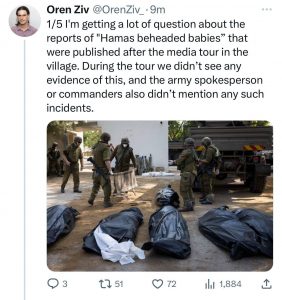
The Israeli journalist oren ziv tweeted about the claim of finding beheaded babies in the settlements near Gaza.

Posted in War | Comments Off on The Israeli journalist oren ziv tweeted about the claim of finding beheaded babies in the settlements near Gaza.

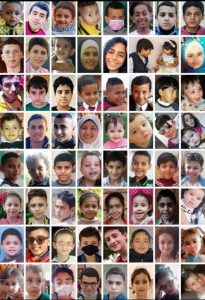
Some of the “human animals” the Israeli Enemy War Minister was talking about.

Gaza Ministry of Health Update
Thursday, October 12 (2023), 1: pm

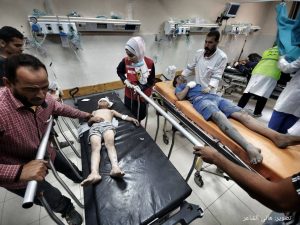
Gaza:1,354 Palestinians killed since the start of escalation on the morning of 7 October, and 6,049 citizens were injured

🚨 The health system has begun to collapse

🚨 ICU bed numbers were expanded, but have already been filled. The wounded who need an ICU bed now have no place to be admitted.

🚨The number of injured people exceeds the capacity of the operation rooms

🚨 The number of injured people is greater than the hospitals’ clinical capabilities, even after they were expanded and the injured were placed in the corridors.

Posted in War | Comments Off on Some of the “human animals” the Israeli Enemy War Minister was talking about.

from Palestinian Ministry of Health:

🚨About 60% of the injuries occurred by the Israeli airstrikes were among women and children in the Gaza Strip.
🇵🇸 Ministry of Health – Gaza Strip
🚨 The Ministry of Health has decided to start regulating health services, to direct the limited electrical generator capacity to the life-saving and vital departments as much as possible during the Israeli aggression, the power cuts, and the lack of fuel supply to hospitals.
🇵🇸 Ministry of Health – Gaza Strip
🚨 The Ministry of Health has decided to start regulating health services, to direct the limited electrical generator capacity to the life-saving and vital departments as much as possible during the Israeli aggression, the power cuts, and the lack of fuel supply to hospitals.

and they are closing hospitals but for the most serious wounded
finished most supplies and fuel only for operating rooms and for short time.
more than 40% wounded/ dead are children

Posted in War | Comments Off on from Palestinian Ministry of Health:

Gaza under Attack: Civilian Objects Targeted and Destruction and Casualties Inflicted by Israeli Retaliatory Strikes

The Palestinian Centre for Human Rights (PCHR) alarmingly follows up the rapidly escalating events in the Gaza Strip within a widescale aggression launched by the Israeli Occupation Forces (IOF) and the accompanying retaliatory strikes on dozens of civilian objects, including the bombing and destruction of residential towers and houses over their residents’ heads.


PCHR emphasizes that these Israeli airstrikes are retaliatory widely targeting civilian objects. PCHR also warns that the Israeli threats and conduct in field would inflict further Palestinian civilian casualties and cause mass forcible displacement across the Gaza Strip.


According to the Palestinian Ministry of Health (MOH), 256 persons killed, including 20 children, and 1788 others wounded, including 121 children, arrived at the Gaza Strip’s hospitals.


PCHR’s fieldworkers are working around the clock in extremely difficult situation to investigate the death circumstances of many Palestinian civilians and to document various airstrikes that have targeted civilian objects and inflicted casualties and losses.


Moreover, IOF have ordered by phone calls or in public statements, residents of many neighborhoods from the north to the south of the Gaza Strip to evacuate their houses, in a measure that amounts to a form of forced displacement. Thus, thousands of civilians took refuge in dozens of schools that were opened as temporary shelters in Gaza Strip’s central cities.


Moreover, Gaza Power Plant has announced that the electricity deficit had risen to more than 80% after power supply lines coming from Israel were cut as decided by the latter to stop supplying Gaza with electricity. This will unequivocally cause a critical humanitarian catastrophe.


The Following are the most prominent attacks against civilians and civilian objects:


Saturday 07 October 2023


At 10:30: journalist Mohammed Tuhami al-Salhi (29), from Nussairat refugee camp, arrived a dead body at Al-Aqsa Martyrs Hospital in Deir Al-Balah after being injured in his back while he was covering the events after Palestinians broke into the security border fence, east of central Gaza Strip.


At 11:00: Ameer ‘Abdullah Mohammed al-Khour (19) was killed when he was coincidingly passing by an area, where IOF’s warplanes were targeting Palestinian armed groups in southern Gaza City.


At 12:00: IOF warplanes targeted an MOH ambulance in eastern Khan Yunis while the latter was evacuating several injuries. As a result, paramedic Marwan Abu Ridah was killed while other paramedics and Palestinians were injured.  About half an hour later, IOF warplanes fired another missile at another ambulance at the time of its arrival at the emergency department in the Nasser Medical Complex, west of Khan Yunis. As a result, the ambulance sustained severe damage and many persons, including paramedics, sustained injuries. Additionally, journalist Ibrahim Mohammed Qannan (50), Al-Ghad TV’s correspondent, was injured while he was covering the incidents in the area.


At 14:30: a bomb fell in the Indonesian Hospital’s yard in Jabalia, killing Yusra Husni Salha (67) after she sustained shrapnel injuries, and causing damage to the hospital’s oxygen station.


At 16:20: IOF warplanes fired several missiles at Palestine Tower in al-Rimal neighborhood, destroying it and causing severe damage to nearby buildings. The 14-storey tower housed 78 apartments, including residential apartments and media and commercial offices.


At 16:30: IOF warplanes fired several missiles at a building housing charitable societies in central Gaza City, destroying it and causing severe damage to nearby buildings.


At 18:30: IOF warplanes targeted Ihab Kuhail’s 2-storey house and its warehouses in Gaza City. As a result, the house was destroyed, and Kuhail’s 2-year-old son Nour al-Deen was killed.


Around the same time, IOF warplanes targeted ‘Awni Dous’s 3-storey house in al-Zaytoun neighborhood, east of Gaza City without prior warning. The house, which sheltered 3 families, was destroyed over their residents’ heads, killing 11 of them, including 5 children and 3 women.


At 18:35: IOF warplanes targeted al-Hashem (3) Residential Building of 8 floors in Beit Lahia, destroying it and another nearby house. Al-Hashem Building housed 9 residential apartments and 6 shops.


At 21:41: an Israeli drone targeted 3 ambulances in Jabalia. As a result, two paramedics namely Tareq Mohammed ‘Ashour (39) and Mahmoud Sameeh Abu Mashayikh (33) were killed, and two other paramedics were injured.


At 20:00: IOF warplanes targeted a 5-storey house belonging to Abu Quta family in al-Shaboura refugee camp in Rafah. As a result, 18 persons were killed: 13 were residents of the house, including 5 children and a woman, 3 from a nearby house and the last 2 were a neighbor and a passer-by. Also, 25 others sustained various injuries.


At 21:20: IOF warplanes targeted a plot of land in Jabalia after ordering residents in the area to evacuate. As a result, two houses were destroyed.


At 21:00: IOF warplanes fired a missile at al-Mahmoum family house in eastern Rafah, destroying it, but no casualties were reported.


At 22:05: IOF warplanes targeted Sa’d al-Ansari Mosque in Beit Lahia, destroying it completely and causing partial damage to nearby houses and schools.


At 22:42: IOF warplanes fired a missile at al-Ameen Mohammed Mosque in the Emirati neighborhood in western Khan Yunis, destroying it completely and causing damage to nearby houses and 2 UNRWA schools.


At 23:00: IOF warplanes fired without prior warning several missiles at Abu Daqqah’s 3-storey house in ‘Abasan al-Kabira, east of Khan Yunis, destroying it completely over the residents’ heads and causing damage to nearby houses. As a result, 10 dead bodies were pulled from the rubble, including 4 women and 3 children. Additionally, the civil defense teams are still searching for missing people trapped under the rubble.


At 23:30: IOF warplanes fired several missiles at a 6-storey residential building housing13 apartments in al-Naser neighborhood. As a result, the building was destroyed.


Sunday, 08 October 2023


At 12:40: IOF warplanes bombed a densely populated area surrounding the office of Hamas Chief, Yahya Sinwar, and the vicinity of Palestine Stadium in central Gaza City. As a result, the Office was destroyed, 2 UNRWA Schools: Al-Mamounia Preparatory and Primary Schools, were directly targeted in addition to empty land and a building belonging to Younes family. Also, an elderly woman was killed while the search continues for missing persons under the rubble.


At 01:00: IOF warplanes launched several missiles at the 3-storey Islamic National Bank headquarter in Al-Nasr neighborhood in northern Gaza, destroying it completely.


At 01:45: IOF warplanes launched several missiles at the 3-storey Palestine Production Bank headquarter in central Gaza, destroying it completely. Also, the Palestine Endowment Bank was destroyed noting it is still under construction.


At 03:00: IOF warplanes launched 2 missiles at a building housing the central Beit Hanoun market, the Ministry of Interior, Health Insurance Unit, Workers’ Office, and Higher Committee for Tribal Affairs in central Beit Hanoun.  As a result, the building was destroyed, causing damage to nearby houses, and many people were injured.


At 03:30: IOF warplanes fired a missile at a house, south of Rafah. As a result, the house was destroyed, and two Palestinians sustained light injuries. Also, IOF warplanes also bombed and destroyed a house in Al-Tanour neighborhood in Rafah.


At 03:40: IOF warplanes bombed and destroyed Al-Aqsa residential building of 4 floors housing 16 apartments in Al-Rimal neighborhood in central Gaza City.


At 04:15: IOF warplanes bombed the 5-storey house of Hamas Leader Fathi Hammad in Beit Lahia housing project.  As a result, the house, which sheltered 5 families, was destroyed. At 08:45: IOF warplanes bombed and destroyed another 2-storey house belonging to him in Jabalia.


At 05:25: IOF warplanes bombed and destroyed Watan Tower in central Gaza. The 14-storey building housed 8 apartments on each floor; all of them were commercial offices, shops and clinics. Also, nearby houses and buildings were also severely damaged.


At 06:20: IOF warplanes bombed a 2-storey house belonging to Abu ‘Oun family on the heads of its residents without prior warning.  As a result, the house was destroyed and four of its residents were killed, including the father and his three children.


At 06:30: IOF warplanes bombed and destroyed a 3-storey residential building of 5 apartments in Al-Nasr neighborhood in northern Gaza over the heads of its residents without prior warning.  As a result, a father, mother and their four children were killed.


At 06:40: IOF warplanes bombed Al-‘Aklouk Tower on Al-Nasr Street in Gaza. As a result, the 10-storey tower, which housed 70 residential apartments, was destroyed, and nearby buildings and facilities sustained severe damage.


At 06:55: IOF warplanes launched two missiles at the house of Hamas Leader Ghazi Hamad in Al-Geneina neighborhood in Rafah and destroyed it.


At 07:00: IOF warplanes bombed and destroyed the house of Hamas Leader Nizar ‘Awadallah in Al-Nasr neighborhood in northern Gaza, killing his son Muhammad.


At 07:00: IOF warplanes bombed and destroyed the 3-storey house of Hamas Leader Salah Bardawil in Al-Qarara, north of Khan Yunis.  Also, nearby houses sustained damage.


At 07:00: IOF warplanes bombed and destroyed a house belonging to Abu Rakab in Al-Zawaida village in central Gaza Strip, over the heads of its residents without prior warning.  As a result, a family of 7 was killed, including a father, mother and their 5 children.


At 07:20: IOF warplanes bombed a house belonging to Abu Khousa family in Deir al-Balah City without prior warning. As a result, the house and a nearby house were destroyed, 2 persons were killed, including a woman who was a resident in the house, while the search continues for the missing persons trapped under the rubble.


Moreover, IOF warplanes bombed a building in Nuseirat refugee camp. As a result, the flying rubble hit a nearby house belonging to Abu Hujair family, killing a person and seriously wounding another.


At 07:30: IOF warplanes bombed the house of Hamas Leader Zakaria Abu Muammar in Ma’an area, east of Khan Yunis. As a result, the house was destroyed, and 5 persons sustained minor injuries.


Meanwhile, IOF warplanes fired two missiles at the house of Hamas Leader Isma’il Barhoum in Al-Geneina neighborhood in Rafah. As a result, the house was destroyed, and several minor injuries were reported.


At 09:00: IOF warplanes bombed a 2-storey house belonging to Hamdan Al-Najjar in Khuza’a, east of Khan Yunis, without prior warning.  As a result, the house was destroyed on the heads of its residents, and the medic crews recovered 3 bodies from the rubble belonging to the house’s owner, his wife, and his son.


At 09:00: IOF warplanes bombed a building housing Itqan Office for Financial and Management Consulting in central Gaza City. As a result, the building sustained partial damage in addition to nearby buildings.


At 10:45: IOF warplanes launched 2 missiles at a house belonging to Mohammad Abu Jazar in Al-Geneina neighborhood in Rafah and destroyed it.


At 10:35: IOF warplanes bombed a residential building housing shops in Jabalia refugee camp, completely destroying it.  Also, several nearby houses and facilities sustained severe damage and injuries were reported.


At 11:55: IOF warplanes bombed and destroyed a 3-storey house in Beit Lahia.


PCHR’s fieldworkers are working around the clock in an extremely difficult situation to investigate the death circumstances of many Palestinian civilians and to document various airstrikes that have targeted civilian objects and inflicted casualties and losses.


PCHR warns against further loss of civilian life in one of the most densely populated areas in the world that completely lacks any form of protection as there is neither public or private shelters nor safe humanitarian corridors. PCHR reiterates that in all previous aggressions on the Gaza Strip, civilians and civilian objects have been always under IOF’s attacks to exert pressure on the Palestinian armed groups.


PCHR stresses that the Israeli airstrikes violating the international humanitarian law principles (distinction and proportionality,) the strikes targeting densely-populated areas, and the use of weapons as collective reprisals constitute grave breaches of the four Geneva Conventions of 1949 and amount to war crimes.


PCHR calls upon the international community to take immediate action to end the Israeli crimes and prevent any further deterioration of the humanitarian conditions.
Posted in War | Comments Off on Gaza under Attack: Civilian Objects Targeted and Destruction and Casualties Inflicted by Israeli Retaliatory Strikes

escalation in Gaza strip and Israel up date

https://unocha.us2.list-manage.com/track/click?u=83487eb1105d72ff2427e4bd7&id=d9e76cbca8&e=2eb5b49f41

Posted in War | Comments Off on escalation in Gaza strip and Israel up date

gaza archeology

https://www.google.com/url?sa=t&rct=j&q=&esrc=s&source=web&cd=&cad=rja&uact=8&ved=2ahUKEwji-87mpd-BAxWjVfEDHTNkAwIQwqsBegQIDxAB&url=https%3A%2F%2Fwww.euronews.com%2Fvideo%2F2023%2F07%2F19%2Fparadise-for-archeologists-roman-era-aristocrat-tombs-revealed-in-gaza&usg=AOvVaw3AfLjYHa4xQLs27NyaKTbf&opi=89978449

https://www.google.com/url?sa=t&rct=j&q=&esrc=s&source=web&cd=&cad=rja&uact=8&ved=2ahUKEwji-87mpd-BAxWjVfEDHTNkAwIQwqsBegQIERAG&url=https%3A%2F%2Fwww.youtube.com%2Fwatch%3Fv%3D8JwKZCeRPcE&usg=AOvVaw1d16YaMu5acAfYJyPbOjm2&opi=89978449

https://www.google.com/url?sa=t&rct=j&q=&esrc=s&source=web&cd=&cad=rja&uact=8&ved=2ahUKEwji-87mpd-BAxWjVfEDHTNkAwIQwqsBegQIDhAG&url=https%3A%2F%2Fwww.youtube.com%2Fwatch%3Fv%3D8u2EiYW0ab0&usg=AOvVaw0XepaiXqWm_4y1X1Eo_ux-&opi=89978449

Posted in Uncategorized | Comments Off on gaza archeology

Palestinian childrenremain the group most targeted by Israel

Posted in Uncategorized, War | Comments Off on Palestinian childrenremain the group most targeted by Israel

EMERGENZA FARMACI A GAZA RACCOLTA DI FONDI

A Gaza sono esaurite le risorse di farmaci e dispositivi medici per i centri di dialisi e non riescono a procurarle nonostante l’impegno del Ministero della Salute locale.I SOLI 2 CENTRI DI DIALISI DELLA STRISCIA DI GAZA CHIUDERANNO SE NON RICEVONO SOSTEGNO RAPIDAMENTE

APRIAMO UNA RACCOLTA DI FONDI

PIÙ DI MILLE E CENTO PAZIENTI ADULTI E QUARANTA BAMBINI BENEFICERANNO DELL’AIUTO

LA DIALISI E’ UN INTERVENTO SALVAVITA PER QUESTI PAZIENTI

Donate a NWRG-odv, Genova che ordinerà medicinali e dispositivi a Gaza

Presidente Prof.Paola Manduca paolamanduca@gmail.com

c/c NWRG presso Banca Etica

IBAN: IT59Y0501801400000011670924

SWIFT: ETICIT22XXX

causale Emergenza Gaza x Dialisi

Testo del video del dr Mohammed al Anqar, Direttore dialisi pediatrica, Rantissi Hospital, Gaza

“Il reparto di dialisi dell’ospedale Rantissi è l’unico a Gaza per pazienti pediatrici

Soffre di carenza grave di dispositivi e medicine e questo mette a rischio la vita dei pazienti

Sollecitiamo quindi l’aiuto di enti ed associazioni, di gruppi per i diritti umani e della società civile a dare una mano per riuscire a provvederle”

Testo del video

Buongiorno

Sono la madre di un bambino che è in dialisi.

Durante questi anni il mio bambino e tutti I suoi amici in questo reparto di emodialisi hanno sofferto per la carenza di dispositivi medici e medicine essenziali per la loro sopravvivenza. Molto spesso abbiamo dovuto comperare noi il necessario perchè vogliamo salvare la vita dei nostri bambini.

Grazie

Posted in Blockade | Comments Off on EMERGENZA FARMACI A GAZA RACCOLTA DI FONDI

Why Gaza needs to talk about suicide

Why Gaza needs to talk about suicide

Muhammad al-Najjar (Via Facebook)

I was deeply saddened to learn that my friend Muhammad al-Najjar had taken his own life.

Muhammad – aged just 27 – was a poet.

He often wrote when he was feeling down or stressed.

But sometimes he did not derive any therapeutic benefit from doing so. Reality in Gaza is so hard that creativity did not offer him any escape over the past couple of years.

One of his poems – “The Chaos Beyond” – was especially poignant.

It referred to a “messenger of the dead” who “came knocking on a door.”

The poem depicted death as offering comfort to someone who has undergone distress and instability.

I heard Muhammad recite this poem at a 2021 seminar.

In a message posted on Facebook shortly before his death, Muhammad made clear that he was receiving treatment for depression but that he couldn’t handle the pain inside him.

Muhammad’s childhood was traumatic. He was only 12 when his father died following an illness.

As the eldest child, Muhammad felt a duty to protect his siblings.

He was proud of their achievements. He recently expressed happiness at how his sister Salma had done well in the tawjihi – exams for students in the final year of high school. Salma is a poet, too, and has clearly been influenced by her brother.

Muhammad loved listening to other poets.

I have witnessed him become excited at poetry readings. He would ask for particular lines or verses to be repeated so that he could savor them.

“Suffocated”

Muhammad’s death had a profound impact on many people in Gaza.

Ismail – a man in his 30s – told me he felt “suffocated” when he heard the terrible news about Muhammad. Although it was late at night, Ismail decided he needed to go out for a walk.

Earlier this year, Ismail attempted suicide. He was found unconscious by his brother, who rushed him to hospital.

Ismail’s brother did not tell police officers stationed at the hospital what had happened. He just told the police that Ismail had a nervous condition.

Ismail graduated from Gaza’s Al-Aqsa University in 2015, qualifying as a primary school teacher.

Apart from working as a waiter for a few years, Ismail has found no jobs since his graduation.

The lack of opportunities has been frustrating. He feels that he has not made progress in his life.

While he has thought about emigrating from Gaza, he does not have enough money to do so.

A dangerous taboo

Living in a besieged and occupied territory – where we are repeatedly bombarded by our occupier (Israel) – is by definition depressing. Yet we avoid talking about depression.

Ismail wants this taboo to be removed.

“It’s dangerous when we are under pressure to hide how we feel,” he told me. “I know many people have the same symptoms as me. They are isolated from society.”

Some other friends and neighbors of mine have died through suicide.

They include Muhanad Younis, who – at the age of 22 – took his own life in 2017.

He had similarities to Muhammad al-Najjar.

Both were educated young men.

Like Muhammad al-Najjar, Muhanad Younis appreciated literature. He enjoyed attending poetry readings and being in the company of writers.

I recall Muhanad Younis speaking about how Gaza was cut off from the world. “There is not a single plane flying from here,” he said more than once, asking how anyone could maintain their mental health under such circumstances.

Muhanad Younis liked to sit in cafes on the shoreline and admire the view of the sea.

Sometimes, though, he did not want to see anyone else. He would stay in his bedroom for long periods.

Official statistics indicate that more than 70 percent of adults in Gaza are experiencing depression.

Gaza lacks the resources for treating depression and trauma. Mental health accounts for only around 2 percent of Gaza’s overall medical budget and the number of psychiatrists is in the single digits.

“The problem is not only in the small number of specialists,” said Ziad al-Adam, one of the very few psychiatrists in Gaza. “Psychiatry provides positive support but is unable to treat the effects of poverty, economic deterioration and Israeli bombing.”

So long as Gaza is under siege and subjected to extreme violence, it seems tragically inevitable that more people will take their own lives.

Amjad Ayman Yaghi is a journalist based in Gaza.

Posted in Blockade | Comments Off on Why Gaza needs to talk about suicide

Gaza Siege (Fact Sheet 2006-2023)

Sixteen years have passed since the Israeli occupation authorities imposed the siege and closure on the Gaza Strip, where 2,375,259 people live until the end of 2022 in a population area of 360 km. They represent 71% of the Palestinian refugees who were expelled by Israeli occupation from their cities, villages, neighborhoods, and homes during the Nakba in 1948 and during the Naksa in 1967.

Health and Psychological Sector

The blockade has severely aggravated the health situation in the Gaza Strip. ‘Israel’ banned the entry of at least 320 medical devices, including dialysis devices, incubators, heart devices, x-rays, diagnostic devices, laboratory devices, and ICU-related medical devices. It also prevented the entry of hundreds of spare parts necessary to fix the broken equipment. In addition, ‘Israel’ banned the entry of essential medicines and medical consumables, where the number of zero-stock items is estimated at 390, with a deficit rate reaching 36.1%.

Poverty and Food Security Sector

The Israeli siege has deeply affected the Palestinian reality regarding poverty and food security in the Gaza Strip. It has managed to increase the poverty rate and exacerbated the overall living conditions, particularly for vulnerable and marginalized groups, and it has posed a clear threat to food security. According to government statistics in the Gaza Strip, the poverty rate has exceeded 59%, affecting more than one and a third million Palestinians. The siege has also hindered the delivery of aid to 80% of the population in Gaza, who depend on fluctuating international assistance, as confirmed by a report from the United Nations Conference on Trade and Development (UNCTAD) released in October 2020.

Unemployment and Graduates Sector

In terms of unemployment, the siege has caused a rise in the unemployment rate in the Gaza Strip, reaching 44.1%, which means around 220,000 individuals are jobless. Most of them are graduates, numbering over 200,000 individuals with various university degrees. This has contributed to the mentioned unemployment rate. It is worth noting that 60,165 graduates applied for employment in the government sector in Gaza during 2022, according to official government statistics.

Water and Environmental Sector

The siege has even affected the water sector and the environment, which are essential components of a safe life. While official reports indicate an increasing demand for water amid the scarcity of natural water sources, the siege prevents the implementation of necessary water projects. This has led to excessive depletion of the groundwater reservoir and increased salinity of water. The water budget deficit for the groundwater reservoir has reached approximately 120 million cubic meters annually. The average chloride ion concentration, an indicator of water salinity, has reached around 1035 mg/liter, compared to the World Health Organization’s drinking water standard of 250 mg/liter, representing an increase of approximately 314% above the recommended limit for chloride concentration in drinking water.

The Agricultural Sector

The blockade halted the reconstruction of the agricultural sector in the Gaza Strip, which is considered one of the important sectors driving the Palestinian economy. It contributes to 12% of the total GDP and employs around 13% of the Palestinian workforce. The blockade caused significant damage to this vital sector by preventing the restoration of agricultural lands destroyed by the occupation, including uprooting, burning, and damaging hundreds of thousands of fruitful trees such as olive and citrus trees, as well as tens of thousands of agricultural hectares.

Infrastructure and Power Sector

The Israeli siege has brought municipal, street, and wastewater treatment projects to a halt and led to a shortage in equipment and machinery. The Israeli occupation has bombed Gaza’s sole power plant with the aim of aggravating the humanitarian situation in the impoverished enclave. While its population of two million needs over 600 megawatts to allow for constant access to electricity, Gaza is only able to produce 200 megawatts at best. The Israeli siege prevented Gaza’s municipalities from carrying out projects worth around $300 million to improve the infrastructure. Meanwhile, the losses incurred by the Palestinian Ministry of Local Government were estimated at $270 million as a result of the Israeli siege and repeated attacks. The ministry also suffered around $30 million in indirect losses due to the Israeli blockade.

Posted in Blockade | Comments Off on Gaza Siege (Fact Sheet 2006-2023)